BAY LEAF-Laurus Nobilis
Also known as: bay laurel, sweet bay, noble laurel, indian bay, roman laurel
Parts used: leaves, berries, bark
Meridians/Organs affected: heart, spleen, digestive, kidneys, bladder, pancreas, reproductive, urinary, immune
Properties: stimulant, emmenogogue, carminative, emetic, diaphoretic, aromatic, stomachic, astringent
Bay is a member of the Lauraceae family. It is a frost-hardy, evergreen type tree that can get up to 50 feet tall. It has leathery, oval-shaped leaves and cream colored flowers that appear in the spring in clusters followed by dark purple berries. Commonly found in the Canary Islands, the Far East, Italy, France and parts of England and the Americas. It does better in a sub tropical climate.
This plant has quite a lengthy history. It was one of the most celebrated plants by early poets and athletes. The leaves were used in crowns and dedicated to gods of music and poetry. (This was back when poets were highly thought of and people aspired to be one). Laurel crowns were placed on the heads of Olympians, and doctors were honored with a laurel crown upon graduation. Court poets were even given the title of 'laureate'. This gave rise to the term 'baccalaureate' which comes from 'bacca-laureus' meaning 'laurel berry' and has become an academic standard.
In Greece, the leaves were chewed by priestesses before reading oracles. It was also believed that if you kept a bay leaf in your mouth you would be protected from misfortune and if you wore it on your head it would keep you from being struck by lightning. (Don't ask me how people come up with this stuff...) The older herbalists viewed bay as a virtuous tree. Parkinson stated that it is "..both for honest civil uses and for physic, yea both for the sick and the sound, the living and the dead." Culpeper wrote that, "The berries are very effectual against all poisons of venomous creatures, and the sting of wasps and bees, as also against the pestilence or other infectious diseases..." He also recommended it for "..diseases of the bladder, pains in the bowels by wind and stopping of urine." Culpeper was a very superstitious man who believed that bay was a "...tree of the sun and under the celestial sign Leo, and resisteth witchcraft very potently..." Even Shakespeare wrote of it in Richard II saying that, "Tis thought the King is dead, we will not stay, the bay trees in our country are all wither'd." which was considered to be a bad omen. The Greeks dedicated the bay tree to Apollo and believed it to be an emblem of the sun god. It was believed to protect one from evil.


The leaves of the bay tree are diaphoretic and emetic in large amounts. Bay oil distilled from the leaves and berries was used for bruises and sprains and in the ears for earaches. Bay tea was used to relieve indigestion, gas and to improve one's appetite. Jethro Kloss said that the bark is great for kidney and bladder stones as well as the spleen, pancreas and liver. He said that an infusion of the berries was good during serious epidemics such as measles, smallpox, diphtheria, typhoid, etc. The berries have been used for menstrual issues and the child-birthing process. A tea from the berries was believed to be good for the flu, colds, fevers, chronic coughs, asthma, worms, to clear out the brain, the eyes and the lungs. The oil has been used for eczema and itching, arthritic and rheumatic joints as well as bruising. It is also said to be good for sunburns. The berries have been used to remove obstructions in the system, and as an abortifacient so should NOT be used by pregnant women.
As is customary with my posts I am including some links below for your benefit. Use them as you deem necessary.
http://www.amazon.com/Simply-Organic-Certified-0-14-Ounce-Container/dp/B0012BS9F4/ref=sr_1_1?ie=UTF8&qid=1399749019&sr=8-1&keywords=bay+leaf
http://www.amazon.com/9GreenBox-Sweet-Laurel--Laurus-Nobilis-/dp/B005RTRWX2/ref=sr_1_9?ie=UTF8&qid=1399749033&sr=8-9&keywords=bay+leaf
http://www.amazon.com/Ouidad-Mediterranean-Exfoliating-Scalp-Treatment/dp/B008U5RRHQ/ref=sr_1_17?ie=UTF8&qid=1399749102&sr=8-17&keywords=bay+leaf
http://www.amazon.com/Whole-Spice-Leaves-Organic-Ounce/dp/B00AO9NWUW/ref=sr_1_26?ie=UTF8&qid=1399749116&sr=8-26&keywords=bay+leaf
http://www.amazon.com/100%25-Pure-Leaf-Steam-Distilled/dp/B00FXEKQ7U/ref=sr_1_49?ie=UTF8&qid=1399749215&sr=8-49&keywords=bay+leaf
http://www.amazon.com/Aura-Cacia-Essential-Pimenta-Racemosa/dp/B001895GG0/ref=sr_1_52?ie=UTF8&qid=1399749229&sr=8-52&keywords=bay+leaf
FENNEL-Foeniculum Vulagare
Parts used: leaves, stalks, seeds
Meridians/Organs affected: digestive, urinary, respiratory, spleen, liver, stomach, kidney, female reproductive
Properties: aromatic, antispasmodic, carminative, diuretic, expectorant, stimulant, anti-inflammatory, antimicrobial, galactogogue, emmenogogue, stomachic, tonic, diaphoretic
Fennel is a member of the Umbelliferae family along with carrot, dill and Queen Anne's lace. It has gray-green feathery fronds that protrude from celery-like stalks and produce lovely yellow flowers on flat topped umbels. The flowers turn to grayish-brown seeds that taste similar to licorice but with a milder flavor. Fennel can get up to four feet in height and is a native of the Mediterranean, particularly Italy, but can now be found all over the globe. It is a beautifully aromatic plant that needs a long growing season and is best planted alone away from other garden plants in a sunny spot.
Fennel is one of those plants that date back to ancient times. The Chinese, Egyptians, and East Indians all used it medicinally as well as a food. Hippocrates and Dioscorides both recommended it to nursing mothers to increase milk flow (something it is still used for today) and Pliny used it for eye conditions. The Romans used it for digestive complaints and would often eat it in cakes or breads after meals to assist with indigestion and to freshen breath. The Greeks used fennel as a slimming herb as it helps to control appetite and acts as a mild diuretic. It was an ingredient in 'gripewater' along with dill to ease colic in infants. The Chinese used fennel to pull the poison from snake and insect bites. Culpeper said it 'expels wind, provokes urine, and eases the pains of the stone and helps it to break." During medieval times it was hung over doors to repel devils and witches and the seeds were put in locks to keep ghosts out (wonder if they were thinking about using a key after stuffing the lock full of fennel...).
Fennel is known to freshen breath and help expel gas from the system and improve digestion. It is commonly used in Asian cultures for gastrointestinal spasms, acid stomach, heartburn, abdominal pain and colon disorders. Fennel is also used as an expectorant for asthma and bronchitis. It has been proven effective for gout, pain, convulsions (except for epilepsy), and to help cancer patients after they have been through treatment. It has been useful for menstrual issues involving irregular menses and to help with jaundice conditions when the liver is obstructed.


The first mention of fennel essential oil was in 1500 in a book called, 'On the Art of Distillation' by Jerome Brunschweig. Fennel oil is distilled from the seeds and smells very similar to anise. Fennel oil helps to detoxify the body, aid in cellulite reduction and suppress the appetite. It has been used successfully for gout, arthritis, rheumatism, urinary tract infections, kidney stones, hiccups, nausea, vomiting, to strengthen muscle tone, fight gum infections and help rehabilitate alcoholics and drug abusers; it acts to counter alcohol poisoning and has a tonifying effect on the spleen, liver and kidneys. It helps with puffiness, inflammation and conjunctivitis. Perhaps the best known use for fennel is that of a culinary nature. It is the herb most commonly paired with fish and is often used in soups and salads. The seeds are used in salamis, breads, curries and in Chinese Five Spice. The stalks can be cooked like celery or eaten raw (my favorite way to eat them). Fennel is also used to flavor the liquor Sambuca.
Fennel should not be used by pregnant women as it can stimulate menstruation.
As is customary with my posts I am including some links below for your perusal. Use them as you feel you need to.
http://www.amazon.com/Natures-Way-Fennel-Seed-Capsules/dp/B001E0R25Q/ref=sr_1_1?ie=UTF8&qid=1399739471&sr=8-1&keywords=fennel
http://www.amazon.com/Starwest-Botanicals-Organic-Fennel-Seed/dp/B0016AZH4M/ref=sr_1_2?ie=UTF8&qid=1399742369&sr=8-2&keywords=fennel
http://www.amazon.com/Fennel-Sweet-Therapeutic-Grade-Essential/dp/B004705VLW/ref=sr_1_5?ie=UTF8&qid=1399742369&sr=8-5&keywords=fennel
http://www.amazon.com/Heathers-Tummy-Organic-Fennel-Teabags/dp/B000AF0A78/ref=sr_1_6?ie=UTF8&qid=1399742369&sr=8-6&keywords=fennel
http://www.amazon.com/Heathers-Tummy-Organic-Fennel-Loose/dp/B0002UDY9W/ref=sr_1_9?ie=UTF8&qid=1399742369&sr=8-9&keywords=fennel
http://www.amazon.com/Traditional-Medicinals-Organic-Fennel-16-Count/dp/B0089VPTVM/ref=sr_1_11?ie=UTF8&qid=1399742369&sr=8-11&keywords=fennel
http://www.amazon.com/Natures-Answer-Fennel-Seed-1-Ounce/dp/B000I4AJLS/ref=sr_1_12?ie=UTF8&qid=1399742369&sr=8-12&keywords=fennel
http://www.amazon.com/Florence-Fennel-100-Seeds-900/dp/B001LBH1G8/ref=sr_1_13?ie=UTF8&qid=1399742369&sr=8-13&keywords=fennel
LAMBS QUARTER-Chenopodium Album
Also known as: fat hen, pigweed, mealweed, goosefoot, bacon-weed, wild spinach, epazote
Parts used: leaves, bud clusters, seeds
Meridians/Organs affected: structural, blood, circulatory, digestive
Properties: antiscorbutic, anti-inflammatory, nutritive, blood purifying, anti-parasitic
Lamb's Quarter belongs to the Goosefoot family along with beets, quinoa, spinach and Swiss chard. It is an annual with pale green leaves that are alternate and look like they were dusted with powdered sugar. Lamb's Quarter has erect, branched stems and pale gray-green flowers that are borne on spikes from July to September. The seeds are shiny and black and have been used similar to amaranth or quinoa. It is a native of Euro-Asia but can be found throughout the usa now, especially in waste places, cultivated fields, gardens, public parks, vacant lots, cracks in pavement, median strips, rock outcroppings, etc. It can get up to seven feet tall and is extremely intolerant to frost and/or drought, making it an exceptional plant for survival. One plant can have up to 75,000 seeds which can remain in the soil dormant for centuries.
There are at least 60 varieties of Lamb's Quarter throughout the globe. Seed stores have been found in many European Neolithic ruins and were believed to be a ritual food for the Tollund man (The Tollund Man is the naturally mummified corpse of a man who lived during the 4th century BC, during the period characterised in Scandinavia as the Pre-Roman Iron Age) 2,000 years ago in Denmark. The Blackfoot indians have used the seeds since 1500 AD and the seeds are still a part of the Pueblo and Navajo indians culture and meals. In Europe during times of famine the seeds were boiled to make gruel or baked into bread; it is rumored that Napolean's troops lived off this for a time. Many Native American tribes have used the leaves to prevent scurvy and for stomachaches. The seeds were used at times to expel roundworms and a poultice of the leaves has been used for burns, swellings, inflamed eyes and wounds; the leaves have been bruised and applied to those suffering from heat stroke, headaches, and dizziness. The leaves were also chewed to relieve toothaches. Leaf tea was used for arthritis, rheumatism and stomach pain. The crushed taproots have been used as a mild soap substitute.


Lamb's Quarter is a wonderfully nutritive plant. It is high in calcium, iron, potassium, magnesium, phosphorus, vitamin A, vitamin C and some B vitamins, particularly folic acid (B9) and riboflavin (B2). It is called wild spinach and the young leaves and stems have been used similarly to spinach in every way. Lamb's Quarter is high in oxalates so regular ingestion is not recommended unless one has a highly varied diet. Try using it on sandwiches, in soups and sauces, or as a or sauteed vegetable. Both delicious and nutritious!
As is customary with my posts I have included some interesting links below for your benefit. Use them as you deem necessary! Live long and be happy!
http://www.amazon.com/Herb-Seeds-Goosefoot-White-100/dp/B00D7KOJZ2/ref=sr_1_3?ie=UTF8&qid=1399737667&sr=8-3&keywords=chenopodium+album
http://www.amazon.com/Modulatory-Effect-Chenopodium-Against-Cyclophosphamide/dp/3659186465/ref=sr_1_6?ie=UTF8&qid=1399739050&sr=8-6&keywords=chenopodium+album
http://www.amazon.com/Edible-Wild-Plants-Adventure-Series/dp/1423601505/ref=sr_1_12?ie=UTF8&qid=1399739050&sr=8-12&keywords=chenopodium+album
http://www.amazon.com/Northwest-Foraging-Classic-Edible-Pacific-ebook/dp/B00D3OC8PK/ref=sr_1_14?ie=UTF8&qid=1399739050&sr=8-14&keywords=chenopodium+album
CHAPARRAL-Larrea Tridentata, Larrea Divaricata
Also known as: creosote bush, greasewood, black bush, grease bush
Parts used: leaves
Meridians/Organs affected: digestive, circulatory, respiratory, blood, kidneys, liver
Properties: bitter, antiseptic, antibiotic, parasiticide, alterative, expectorant, diuretic, antimicrobial, antioxidant, antispasmodic, antibacterial, antifungal, anti-carcingogenic, blood purifying, anti-scrofulous, emetic (in large amounts), anti-venomous, astringent
Chaparral is a member of the Zygophyllaceae family. It is a low desert shrub found primarily in the southwestern united states. It is a spindly, wind-whipped looking plant with tiny leaves that have a greasy-leathery texture and permeate an odor very similar to creosote. The plant can be anywhere from 3-10 feet tall and is one of the oldest known living plants on the planet along with horsetail-dating back over 10,000 years. It is found mostly in the desert regions of Utah, Nevada, New Mexico, Texas, Arizona and California. It blooms after rainfall between March and May and has bright yellow flowers with five petals.
There is much controversy over this herb. Chaparral is an indian name that refers to any dense thicket of shrubs that grows in an alkali soil. The medicinal uses go back centuries without any reported bad effects but more recent data has said it can harm the liver, etc. So what is one to believe? (Don't get me started on the millions of pharmaceutical drugs on the market that kill people every day).
The Pima and Maricopa Indians boiled the branches to extract the gum and would then use this decoction for digestive issues and stomach complaints. The Native Americans also used an infusion of the leaves and stems to treat cancer, tuberculosis, colds, arthritis, venereal disease, rheumatism and bowel cramping. They also used it to purify the blood. In some places chaparral was used to help balding and more recently it has been used to take the residue of LSD from the system.
Chaparral contains a component called NDGA (nordihydroguariaretic acid). It is a very powerful antioxidant. It has been shown to prevent cell damage that can typically lead to cancer and it also has been shown to have some anti-tumor capabilities. The resin that makes up 20% of chaparral has been found to be antispasmodic and antimicrobial as well as being antioxidant in nature. NDGA has been the subject of many studies and aside from being anti-scrofulous (meaning it helps with tumors in the lymph area) it has also been proven to be anti-fungal, anti-parasitic and antibacterial. It has been found especially useful for skin diseases. Chaparral also helps relieve pain and has been found to increase ascorbic acid levels (vitamin C) in the adrenals. It is believed to protect against sun exposure, radiation and other potential carcinogens. The branches were used in the food industry until the 1960's to prevent rancidity in fats and oils. Given the debate over this herb, I would prefer to let some of the 'experts' give their opinions here.


"Chaparral, also known as creosote bush, has been used by Native Americans to treat a variety of illnesses, including cancer. Chaparral contains an ingredient called nordihydroguariaretic acid (NDGA), a potent antitumor agent. NDGA inhibits aerobic and anaerobic glycolysis (the energy producing ability) of cancer cells. The flavonoids present in chaparral have strong antiviral and antifungal properties." -Herbal Medicine, Healing and Cancer: A Comprehensive Program for Prevention and Treatment, by Donald Yance, Jr. C.N., M.H., A.H.G.
"The plant is the creosote bush, or chaparral, also known as greasewood, and is a member of the oak family. All tests on chaparral indicates that it is positively non-toxic and has never shown any side effects on patients and if present research is successful it will offer the first anti-cancer drug. The Indians have used chaparral herb for many internal body malfunctions as well as for rash and acne-type skin eruptions, for hundreds of years. Chaparral has antibiotic and antiseptic properties along with immune stimulating substances." -Miracle Medicine Herbs by Richard Melvin Lucas
"More than 20 years ago, a Native American healer from Lava Hot Springs, Idaho, traveled the Rocky Mountain West, successfully treating cancer patients with chaparral as the primary remedy. Chaparral, extremely bitter, contains NDGA, an anticancer substance. IT is also thought to possess more of the antioxidant enzyme SOD (Super Oxide Dismutase) than any other plant. Herbs used widely in South Americe for cancer, even by medical doctors, are pau d'arco and suma. These herbs are less bitter than chaparral and work by tonifying immunity." -Healing with Whole Foods; Asian Traditions and Modern Nutrition, by Paul Pitchford
"In 1959, the National Cancer Institute was informed through lay correspondence that several cancer patients claimed effects on their cancers from drinking chaparral tea. Years later, a similar treatment was brought to the attention of physicians at the University of Utah, when an 85 year old man with a proven malignant melanoma of the right cheek with a large cervical metastasis refused surgery and treated himself with chaparral tea. Eight months later he returned with marked regression of the tumor." -Guide to Popular Natural Products by Ara Dermarderosian
"Herb industry surveys show that more than 200 tons (of chaparral) were sold in the united states between 1970 and 1990. And during this time there was not a single complaint of side effects arising from the use of this herb. When two to three cups of chaparral tea or the isolated NDGA were given daily to more than 50 cancer patients, the only side effects were occasional nausea and diarrhea. Very large doses resulted in lowered blood pressure." -Herbs for Health and Healing by Kathy Keville
It is important to note that the FDA advises against using chaparral as it is considered harmful to the liver-and yet chaparral has been a component of essiac tea since it first came out on the market. It is also important to note that the FDA approves drugs on a daily basis that not only are toxic to the liver but practically every other vital organ in the body. Why anyone would use something approved by the FDA is beyond me as they are responsible for the deaths of thousands with their pharma approved drugs. Keep in mind this company is set aside to approve thing for 'YOUR HEALTH AND WELFARE' and what they approve will KILL YOU DEAD. So...just use your brain if you choose to go either route. Use what you feel is best for YOU despite what anyone else has to say about it.
Chaparral is best used as a tincture or tea but there are any number of applications that have proven useful. As is customary with my posts I am including some links herein for your perusal. Use them wisely.
http://www.amazon.com/Herb-Pharm-Chaparral-Extract-Supplement/dp/B000AKO4J8/ref=sr_1_1?ie=UTF8&qid=1399736730&sr=8-1&keywords=chaparral
http://www.amazon.com/Arizona-Natural-Products-Chaparral-Capsules/dp/B00B7V6T1K/ref=sr_1_3?ie=UTF8&qid=1399736742&sr=8-3&keywords=chaparral
http://www.amazon.com/Chaparral-Leaf-C-S-Wildcrafted/dp/B002ARODQS/ref=sr_1_4?ie=UTF8&qid=1399736742&sr=8-4&keywords=chaparral
http://www.amazon.com/MakingCosmetics-Inc-Chaparral-Extract-2-0floz/dp/B00AFP6KAY/ref=sr_1_10?ie=UTF8&qid=1399736742&sr=8-10&keywords=chaparral
http://www.amazon.com/Starwest-Botanicals-Chaparral-Powder-Wildcrafted/dp/B002DXTYAY/ref=sr_1_24?ie=UTF8&qid=1399737067&sr=8-24&keywords=chaparral
http://www.amazon.com/Essiac-Tea-Packets-Packets-Bottles/dp/B002W9ZRR8/ref=sr_1_6?ie=UTF8&qid=1399737144&sr=8-6&keywords=essiac+tea
http://www.amazon.com/INTERNATIONAL-Essiac-Supplement-Extract-Formula/dp/B00068OOTE/ref=sr_1_7?ie=UTF8&qid=1399737178&sr=8-7&keywords=essiac+tea
http://www.amazon.com/Essiac-Native-Herbal-Cancer-Remedy-ebook/dp/B002GP7Z82/ref=sr_1_14?ie=UTF8&qid=1399737178&sr=8-14&keywords=essiac+tea
Lily of the Valley-Convallaria Majalis
Also known as: May lily, Our Lady's Tears, Ladder to Heaven, Jacob's Ladder, Lily Constancy
Parts used: whole plant
Meridians/Organs affected: heart, kidneys
Properties: antispasmodic, cardiac tonic, laxative, diuretic, mucilaginous
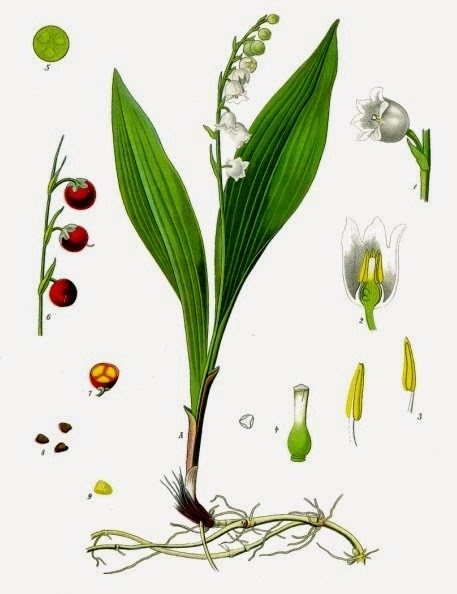
Lily of the Valley is a member of the Lilaceae family along with Garlic, Aloe, Asparagus, Sarsaparilla, Chives and Trillium. It is a beautifully scented plant with a creeping root that sends up quill like shoots in the early spring that sheath one another until they leaf out with oval blades that curl at the base. The flower stalk itself is bare of leaves and has a short stalk that bears small, white, downward facing bell like flowers with curled edges. By the fall, the flowers have turned to berries that are scarlet in color. However, it is rare for the wild variety to come to full maturity due to its creeping root.
The name 'majalis' means 'that which belongs to May'. This comes from astrology as Lily of the Valley is believed to be ruled by Mercury (Maia was the mother of Mercury and the daughter of Atlas). There are many stories involving this plant. It was believed that the scent of it would draw out the nightingale from the bushes to find his mate. There is another story involving St. Leonard who fought a dragon in the woods near Horsham, England, finally killing it after many hours and suffering several wounds. Legend is that wherever his blood was spilled that Lily of the Valley sprang up in memory of the battle. St. Leonard's Forest to this day is covered with these fragrant flowers. Lily of the Valley is also referred to as Our Lady's Tears and is associated with the Virgin Mary. It is considered to be a symbol of purity and can be found in many religious paintings.
The British have used this plant for quite some time for the same things foxglove (digitalis) has been used for without the harmful side effects. Both plants contain cardiac glycosides that increase the strength of the heartbeat while helping to regulate the rate without taxing the blood supply too much. However, with Lily of the Valley the glycosides are released sequentially and are excreted by the kidneys so there is no toxic accumulation in the body. Lily of the Valley also contains flavonoids that act to dilate the arteries while the asparagin content acts as a diuretic helping the body get rid of excess fluid which helps with hypertension.
The dried root has been used for centuries not only as a heart stimulant but also for epilepsy. The powdered root still is used today as a diuretic, and the distilled flower water has been used as an eyewash for palsy (a neurological condition that affects the muscles that move the eye). Tea made from the flowers has also been considered an excellent tonic for nerve issues. It is thought to strengthen the brain and make thoughts more clear.


The chief components of Lily of the Valley are both glycosides-convallamarin and convallarin. Convallamarin is soluble in both water and alcohol and acts much like digitalis on the heart as well as being a diuretic. Convallarin is soluble in aclohol and only slightly soluble in water and helps to purge the body. In the 16th century it was made into what was referred to as 'Golden Water' and stored in gold or silver vessels. It was believed that this water would help anyone suffering from apoplexy (the incapacity resulting from stroke or cerebral hemorrhaging). It was also said that the water 'doth strengthen the memorie and comforteth the Harte.' Gerard was quoted as saying that 'a glasse being filled with the flowers of May lilies and set in an ant hill with the mouth close stopped for a month's space and then taken out, ye shall find a liquor in the glasse which being outwardly applied helps the gout very much.' It was also said to be useful for rheumatism and sprains. An ointment made with the root and lard was used for burns and ulcers and the root was boiled in wine and used for fevers. In some parts of Germany they still make a wine with the flowers of the Lily of the Valley plant and with
raisins.
Culpeper said that, 'It without doubt strengthens the brain and renovates weak memory. The distilled water dropped into the eyes helps inflammations thereof. The spirit of the flowers, distilled in wine, restoreth lost speech, helps the palsy, and is exceedingly good in the apoplexy, comforteth the heart and vital spirits.' It was used during the war at the front lines to treat men who had been exposed to poison gas.
Lily of the Valley provides us with a pale greenish-yellow dye in the spring and a beautiful golden dye in the fall. The USDA has classified it as poisonous, therefore, it is not allowed to be sold in health food stores. However, according to Ed Smith, it is much milder and far safer to use than digitalis but one should go to a qualified physician for such use. Lily of the Valley is not recommended for pregnant women as it can stimulate contractions.
As is customary with my posts I am including some interesting links here for your perusal. Use them as you see fit.
http://www.amazon.com/Giant-Bordeaux-Lily-Valley-Roots/dp/B00IKT323A/ref=sr_1_2?ie=UTF8&qid=1399600456&sr=8-2&keywords=lily+of+the+valley
http://www.amazon.com/Crabtree-Evelyn-Lily-Lotion-8-3oz/dp/B004NHSJHW/ref=sr_1_3?ie=UTF8&qid=1399602605&sr=8-3&keywords=lily+of+the+valley
http://www.amazon.com/Valleys-Jerusalem-Anointing-fl-oz-Bible/dp/B0057FD3ZC/ref=sr_1_5?ie=UTF8&qid=1399602605&sr=8-5&keywords=lily+of+the+valley
http://www.amazon.com/Woods-Windsor-Valley-Toilette-Spray/dp/B003BFXKV2/ref=sr_1_7?ie=UTF8&qid=1399602605&sr=8-7&keywords=lily+of+the+valley
http://www.amazon.com/merlin-crystal-cave-Valley-Essential/dp/B00161DT5A/ref=sr_1_12?ie=UTF8&qid=1399602605&sr=8-12&keywords=lily+of+the+valley
http://www.amazon.com/Crabtree-Evelyn-Lily-Triple-Milled-Soap/dp/B004NHQV1I/ref=sr_1_17?ie=UTF8&qid=1399602826&sr=8-17&keywords=lily+of+the+valley
http://www.amazon.com/Lily-Valley-Ounce-Bottle-11578/dp/B002ESO5Z2/ref=sr_1_26?ie=UTF8&qid=1399602838&sr=8-26&keywords=lily+of+the+valley
http://www.amazon.com/Lily-Valley-Hand-Therapy-25g/dp/B00B2WPFO6/ref=sr_1_27?ie=UTF8&qid=1399602838&sr=8-27&keywords=lily+of+the+valley
http://www.amazon.com/Crabtree-Evelyn-79558-Lily-Shower/dp/B004NHWOQE/ref=sr_1_28?ie=UTF8&qid=1399602838&sr=8-28&keywords=lily+of+the+valley
GINGER-Zingiberis Officinale
Also known as: Canada snakeroot, Indian ginger, Vermont snakeroot
Parts used: Root
Meridians/Organs effected: heart, spleen, lungs, kidneys, stomach, digestive, structural, circulatory
Properties: stimulant, carminative, antispasmodic, antitussive, expectorant, emmenogogue, aromatic, diaphoretic, analgesic, antifungal, anti-inflammatory, aphrodisiac, antibacterial, antiviral, antiemetic
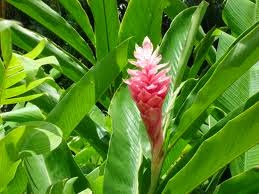
Ginger is a member of the Zingiberaceae family along with turmeric and cardamom. It is a reed-like plant that can get up to 5 feet tall with thick, branching roots. The stems have narrow, pointed leaved that get up to 6 inches long. Ginger has an erect flower on a cone-shaped spike with overlapping bracts that are yellow green when they start and then turn a beautiful purple-yellow. Wild ginger (which is not related) is similar in taste and use but looks entirely different. Wild ginger is milder than the commercial ginger and the leaves of wild ginger (which are heart shaped) can be utilized as well. The flower of wild ginger is often the first part of the plant to appear and hides underneath the leaves as the plant grows.
Ginger dates back over 6000 years with early migrations of people bringing it from southern China across the Pacific to New Zealand and Easter Island. The Arabs considered ginger so valuable that they would purposely mislead traders and/or rivals looking for the plant to some fictional location. The Romans also considered it a valuable commodity and as such placed a tax upon it (200 AD). About that same time the Chinese were using a lot of it in their various herbal preparations. The Romans are responsible for bringing ginger to northern Europe, Marco Polo spoke of it in his travels as well. It was the Europeans who brought ginger to the American continent where it has become a very important crop, particularly in Jamaica, which is considered to produce some of the finest ginger in the world. Ginger is now grown all over the world, including here in the usa.
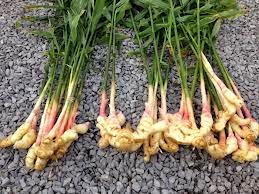
Ginger has been used for millennia in Asian cultures as both a medicine and a food. The Chinese prescribed it as a tonic for the heart and to help with head congestion; they also used it for colds and flu, rheumatism, muscle tension and headaches. Dioscorides used it as a stomachic and a stimulant for digestion. The Romans used it for cataracts and other eye complaints; a preparation of ginger was made and applied to the eyes daily. Hildegarde of Bingen also used it for eye disorders, stomach complaints and as a tonic. She also said it was an aphrodisiac. Ginger was used during the Middle Ages to protect one from the 'Black Death' and the natives of the Pacific Island of Dohu would chew the root and spit it into burns and wounds. The Greeks used it as an antidote to poisoning and to treat stomach disorders. There is even a story of fishermen chewing ginger root and spitting it into the winds to make the storms go away. (There were fishermen who swore this worked).
Ginger essential oil is made from the distillation of the roots. The oil is yellowish and aromatic. The Europeans have used the oil for respiratory conditions, menstrual cramps, jet lag, sore throats, digestive issues, motion sickness, fevers, tonsillitis, diarrhea, colic, etc. It has been used topically for sprains, arthritis, muscle spasms (especially in the lower back) and it also helps with varicose veins as it stimulates circulation and increases blood flow.
One of the things that most people don't know about ginger is that it can rival codeine when it comes to its antitussive (anti-cough) capabilities. It is a strong expectorant and antihistamine, allowing the body to move mucus up and out of the system. Ginger stimulates the immune system, reduces inflammation, and helps to relieve pain. It has been used in many countries as part of a treatment for malaria. Perhaps one of the most well-known uses is for motion sickness and nausea. A study published in the Lancet in 1982 showed that two capsules of ginger were more effective than 100 mg of dramamine. The fresh juice of ginger has been found to reduce glucose levels in test animals so may also prove useful for those with hypoglycemia.
A decoction of wild ginger was used as a contraceptive for women and the leaf tea was used to cleanse the skin when one suffered from measles, chicken pox, acne and rashes. Wild ginger also contains aristolochic acid which is an anti-tumor compound. Pretty interesting to note considering the these two gingers are not related at all.
Dr. Christopher used it quite often for all kinds of stomach complaints and Jethro Kloss said it was great for gout, bronchitis, cholera and paralysis of the tongue. It has been found effective for heart disease, strokes, athlete's foot, migraines, infertility, tendonitis, sciatica, Raynaud's disease, bursitis, erectile problems, chronic fatigue and kidney stones.
Pregnant women should not use this since it can stimulate menstruation.
As is common with my posts, I am including some links herein for your benefit. Use them as you deem appropriate.
http://www.amazon.com/Simply-Organic-Certified-1-64-Ounce-Container/dp/B000WS3AMU/ref=sr_1_2?ie=UTF8&qid=1399600039&sr=8-2&keywords=ginger
http://www.amazon.com/Natures-Way-Ginger-550mg-Capsules/dp/B001E10C9I/ref=sr_1_3?ie=UTF8&qid=1399600039&sr=8-3&keywords=ginger
http://www.amazon.com/Crystallized-Ginger-Slice-Imported-Dried/dp/B005QCP5ZM/ref=sr_1_5?ie=UTF8&qid=1399600039&sr=8-5&keywords=ginger
http://www.amazon.com/Tummydrops-Ginger-individually-wrapped-drops/dp/B004BH15K2/ref=sr_1_6?ie=UTF8&qid=1399600039&sr=8-6&keywords=ginger
http://www.amazon.com/Ginger-People-Original-Chews-4-5/dp/B005Q4FKVO/ref=sr_1_8?ie=UTF8&qid=1399600039&sr=8-8&keywords=ginger
http://www.amazon.com/New-Chapter-Ginger-Force-Softgels/dp/B0015R2C6M/ref=sr_1_11?ie=UTF8&qid=1399600039&sr=8-11&keywords=ginger
http://www.amazon.com/Sea-Band-Ginger-Gum-Anti-Nausea/dp/B000K7B5FC/ref=sr_1_26?ie=UTF8&qid=1399600246&sr=8-26&keywords=ginger
http://www.amazon.com/NOW-Foods-Ginger-Oil-ounce/dp/B0019LVHY2/ref=sr_1_27?ie=UTF8&qid=1399600269&sr=8-27&keywords=ginger
http://www.amazon.com/Starwest-Botanicals-Ginger-Organic-1-Pound/dp/B0016AXCAS/ref=sr_1_28?ie=UTF8&qid=1399600269&sr=8-28&keywords=ginger
http://www.amazon.com/Traditional-Medicinals-Organic-Ginger-16-Count/dp/B0009F3S7I/ref=sr_1_31?ie=UTF8&qid=1399600269&sr=8-31&keywords=ginger
JUNIPER-Juniperus Communis
Also known as: juniper bush, juniper bark
Parts Used: berries, needles
Meridians/Organs affected: urinary, glandular, kidneys, stomach
Properties: aromatic, diuretic, antiseptic, anti-rheumatic, blood purifying, carminative, stimulant, antibacterial, antimicrobial, antifungal, anti-catarrhal, tonic, stomachic, depurative, emmenogogue, anti-inflammatory, sudorific, parasiticide
Juniper is a member of the Cupressaceae family. There are 60 different species of juniper but only ONE is used for its medicinal and culinary aspects: that is the Juniperus Communis.
Juniper can either be an evergreen shrub or tree depending on its habitat and location. As a shrub it is prostrate or sprawling but as a tree it can get up to 12 feet in height. The trees are unisexual with the flower 'cones' of the female trees developing into berries that are first green but develop into blue or black berries when ripe (starting its 2nd or 3rd year). Juniper can be found growing throughout the northern hemisphere nears forests and mountains and growing freely in limestone or chalky soil. They also can be found in the forests of Korea, Canada and Sweden and in the mountains of Hungary and Scotland.
The name of juniper was developed from the Celtic 'geri' meaning 'small bush' and 'prus' meaning 'bitter hot'. This is believed to be the start of European names 'genever' (Dutch) and 'genievre' (French) which became the word 'gin'-the liqueur that is flavored by juniper berries.
Juniper berries were mentioned in Egyptian papyri and have been found in prehistoric Swiss dwellings. The Greeks burned the wood to fight off epidemics; the French used it in hospitals in the 1800's for smallpox; the Romans considered it to be a strong antiseptic; and Galen and Pliny used the berries for liver issues and would recommend it instead of pepper for people who tended towards overeating. Cato the Elder formulated a diuretic wine recipe that seemed to work wonders for people. During the Middle Ages juniper was considered somewhat of a cure-all for bladder and kidney problems as well as headaches; Hildegarde of Bingen used it for pulmonary issues and fevers, and the British considered the berries to be magical and hung swags of juniper on their doors to keep witches and demons at bay. An infusion of the berries was believed to bring youth back to the aging; the French considered it to be a universal panacea; and Dr. Lemery made juniper dragees to give people during the plague so they could avoid infection. (Those became quite a popular item). Juniper has been used to stimulate digestion and improve the appetite, help eliminate mucus from the system, and to stimulate kidney and bladder function. A strong tea made with the berries is also used as a wash for poisonous insect and snake bites, bee stings and dog bites. Among the Native Americans juniper has been used as a urinary tract disinfectant, diuretic and as a contraceptive for women. (In fact, that is what juniper is most well-known for at this time).


The berries are primarily used for urinary issues, stones, gout, rheumatic issues and back pain. The oil of juniper was often mixed with fat in salves to protect wounds from flies, and the berries were used to cause sweating, mucus secretion, stimulate contractions in the intestines and uterus, and help the body produce hydrochloric acid. More recent studies have shown that the berries help lower blood sugar caused by hyperglycemia which means it could prove useful for insulin dependent diabetics. The National Cancer Institute has released information that juniper also has some antibiotic components that are effective against tumors. This might be because juniper contains a high amount of terpinen-4-ol, which is the most prominent component in tea tree oil. Juniper has been found to be effective against staph, shigella, E. Coli, candida, salmonella, strep and pseudomonas aeruginosa. There is no doubt it has many powerful uses for man. However, too much of juniper can also cause kidney irritations so small amounts over a small period are better medicinally. Juniper should not be taken by pregnant women as it stimulates the uterus and menses.

As is the custom with my posts I am including some links below for your benefit. May they prove informative and useful.
http://www.amazon.com/Juniper-Berry-Therapeutic-Grade-Essential/dp/B002RU2R1Q/ref=sr_1_2?ie=UTF8&qid=1398144907&sr=8-2&keywords=juniper
http://www.amazon.com/NOW-Foods-Juniper-Berry-Oil/dp/B0009RSNXU/ref=sr_1_10?ie=UTF8&qid=1398144925&sr=8-10&keywords=juniper
http://www.amazon.com/Natures-Way-Juniper-Berries-capsules/dp/B00014FT42/ref=sr_1_14?ie=UTF8&qid=1398144925&sr=8-14&keywords=juniper
http://www.amazon.com/Japanese-Juniper-Bonsai-Starter-Tree/dp/B001EBJSKC/ref=sr_1_15?ie=UTF8&qid=1398144925&sr=8-15&keywords=juniper
http://www.amazon.com/Juniper-Wood-Incense-Bricks-Incienso/dp/B001BAH8UI/ref=sr_1_16?ie=UTF8&qid=1398144925&sr=8-16&keywords=juniper
http://www.amazon.com/Natures-Answer-Juniper-Berry-2-Ounce/dp/B000Q4053M/ref=sr_1_24?ie=UTF8&qid=1398145148&sr=8-24&keywords=juniper
http://www.amazon.com/Frontier-Natural-Products-Organic-Juniper/dp/B0012BVNRU/ref=sr_1_5?ie=UTF8&qid=1398145205&sr=8-5&keywords=juniper
http://www.amazon.com/Practical-Distiller-Introduction-Quantities-Produced-ebook/dp/B004TRPZH8/ref=sr_1_11?ie=UTF8&qid=1398145329&sr=8-11&keywords=gin
http://www.amazon.com/The-Spirit-Gin-Stirring-Miscellany/dp/1604334622/ref=sr_1_16?ie=UTF8&qid=1398145355&sr=8-16&keywords=gin