Sunday, May 7, 2017

PEONY


PEONY –Paeonia Brownii, Paeonia Lactiflora, Paeonia Veitchii, Paeonia Suffruticosa, Paeonia Officinalis, etc.

Also known as:  White Peony, Red Peony, Bai Shao, Coral Peony, Mou-tan

Parts used: root, flowers

Systems/organs affected: liver, spleen, lungs, nervous system, female reproductive, blood, cardiovascular, kidneys

Properties:  antispasmodic, astringent, emmenogogue, blood tonic, yin tonic, analgesic, anodyne, sedative, anti-inflammatory, vulnerary, febrifuge, depurative
          
          Peony is a member of the Rununculaceae family.  It is a perennial with dark green leaves that are divided into lobed leaflets.  It has red stems and several different color variations of flowers.  The roots are fleshy and either red or white (referring to white or red peony-unlike most assumptions it refers to the root color here rather than the flower color).  While the root is most commonly used for medicine, the flowers also have found a home in herbal kits with European cultures.  The tree peony is also included in this class and rather than be a tree flower, it is in fact a bush with very woody stems.  The peony can get up to 28 inches tall and grows wild throughout China, Tibet, Mongolia and eastern Siberia.  As it is a very popular flower it can now be found throughout the globe. 

Peony is perhaps one of the oldest flowering herbs to be used as medicine dating back some 4000 plus years in ancient Chinese texts.  Peony was actually named for the Greek physician Paion, who was reputedly the physician or caretaker to the Gods.  He used peony quite often for maladies of all kinds.  The healing properties were later recorded by the Roman scientist Pliny who used it for at least 20 different illnesses.  Buddhist monks took it to Japan where they developed a smaller, more delicate version in the 8th century.  In China it is known as the ‘king of flowers’ and has been grown there since 900 BC.   The tree peony was believed to bring riches and honor and was symbolic of spring’s arrival.  The Chinese used both the tree peony and the common peony for medicinal purposes.  They found within their studies that  peonies (Paeonia Lactiflora) yielded two separate kinds of medicine which is commonly known today as Bai Shao (white peony) and Chi Shao (red peony).  The white peony was used for circulation issues, menopause, as a liver tonic, for abdominal pain, menstrual cramping and more while the red peony was used to relieve hot conditions (fevers, sores, inflammation, etc.), to control bleeding and for eczema.  In fact, it was used to treat eczema by the Great Ormond Street Children’s Hospital in London, England.  Tree peonies (Paeonia Suffruticosa) were commonly used for gastro-intestinal issues, bleeding, as an antibacterial and for pain management.

The early Europeans used the common peony to ward off epilepsy (often used as a charm in that respect) although it isn’t used much in that regard today.  Herbalists do recognize a difference between male and female peonies according to the plants appearance though.  Female peonies have smaller, darker flowers that are more divided and contain black seeds.  The female peony is also far more fragrant than its male counterparts.  There are around 30 different species of peony and it is widely prized for weddings and as an ornamental plant aside from its medicinal uses.
Peony has been used by Asian cultures for centuries as a medicinal.  They have used it extensively for childhood convulsions, epilepsy, whopping cough, chorea (abnormal involuntary body movements) and as a blood tonic.  Peony contains a glycoside called paeoniflorin that has been found to act as an antispasmodic and a calming agent.  One study conducted on a combination of licorice root and peony was found to relieve muscle cramping due to diabetes, cirrhosis and dialysis.  Another one conducted on a formula containing peony root, dong quai and a few other herbs, was found to reduce painful menstruation and cramping.  Paeoniflorin was also found to improve mental function in animals-possibly making it a promising aid for mental illnesses like dementia and Alzheimer’s.  Red peony root has been found in Asian studies to have antioxidant activity.  It was also found to contain proanthocyanidins, flavonoids and of course, paeoniflorin.  The root and bark also contain polysaccharides that have been found to stimulate immune cells in lab tests.  Red peony root was found to prevent liver damage from chemical toxins-whether by itself OR in combination with other herbs.  An extract of the root was used in a small study to reduce fibrosis in some patients with chronic viral hepatitis.  The Chinese use a combination of peony extracts to help with thrombosis and excessive clotting.  In one study done on rabbits it was found to lower cholesterol.  A small human study confirmed this but more testing is required.  One study done on Mou-tan bark found it had a remarkable effect on lowering one’s blood pressure.  Peony may also hold some promise for women with PCOS as it was found to improve fertility in women suffering with this condition.  Peony was found to also contain paeonol, a compound found to have anti-fungal, antibacterial and anti-inflammatory capabilities and used for skin complaints and wound care.  As a tonic it has been used for gastrointestinal issues and as an antidote for poisoning.  An extract of the flowers is said to be a skin regenerative and hair conditioner.
          
          White peony has a number of studies under its belt as well.  In June of 2010 a study was published on the antioxidant effects of peony on the liver.  The study published in the ‘Archives of Pharmacol Research’ found that peony extract protects the liver from oxidative stress.  A study published in ‘Die Pharmazie’ in August of the same year found that peony inhibits blood coagulation.  They found 18 different constituents that are active in the blood protecting the cardiovascular system from excessive clotting.  In March of 2010 the results of a study done on rats was published in ‘Phytomedicine’.  The study found that an extract of peony root reduced the urinary albumin in diabetics thus reducing the stress on the kidneys.  (This could help many a diabetic escape dialysis-using other nutrient based options as well of course).


          Peony has also been used for fevers, gout, respiratory issues, upset stomach, neuralgia, migraines, whopping cough, chronic fatigue, osteoarthritis and as an abortifacient to name a few.
          
          Of special note:  peony should NOT be used by pregnant or nursing for the aforementioned reasons (uterine contractions, etc).  It should not be used by those taking blood thinners or blood pressure medications.  Do not use if scheduled for surgery as it may increase the chance of bleeding-stop using at least 2 weeks before scheduled surgery.  Peony should be taken in short spurts for most people-take up to 4 weeks and then let the body rest for a few weeks before starting again as needed.  As always, consult a qualified physician before ever starting a new regimen. 
          As is customary with my posts I am including some links herein for your perusal.  Use them wisely.  Stay strong and healthy!


Wednesday, March 15, 2017

ANGELICA


ANGELICA – Angelica Archangelica, Angelica Sinensis, Angelica Sylvestris, Angelica Atropurpurea, Angelica Polymorpha, Angelica Arguta, etc.
Also known as: Dong Quai (pronounced “tang kuei”), Root of the Holy Ghost, Masterwort, Archangel, Dead Nettle, etc.
Parts used: mostly the root, stems, seeds, leaves.
Systems/organs affected: circulatory, reproductive, liver, respiratory, blood, stomach, intestines, structural, spleen.
Properties: warming liver and uterine tonic, anti-inflammatory, expectorant, culinary, antispasmodic, carminative, stimulant, emmenagogue, diaphoretic, hypotensive, aromatic, estrogenic, hepatoprotective, sedative, antibacterial, anti-fungal, antimicrobial, diuretic, anti-parasitic, antiviral.
ANGELICA is a member of the Umbelliferae (carrot) family. It is a tall, aromatic, stout plant with white to yellow-green flowers that grow in rounded umbels. The stems are hollow and the leaves are deeply divided into three parts that are serrated. It can get up to six feet tall and likes stream banks, moist woodlands, roadsides, thickets, etc. It is believed to be native to Syria but now can be found all over the globe. The flowers bloom from May to August (depending on location) and are replaced by 'winged' tan-colored seeds that some associate with angel's wings. It smells like parsley or celery and, with a small exception of the leaves, eerily resembles water hemlock which is deadly (1/4 tsp. of water hemlock root can kill an adult within 15 minutes). As the hemlock species and angelica are in the same family they will cross pollinate so if harvesting this herb be careful to take note of your surroundings. If you see hemlock nearby do not harvest the angelica – move on to a hemlock-free area and harvest the plants you find there. The leaves of water hemlock also are a little different than angelica in that the side veins only go to the notches or valleys of the leaf whereas angelica's go to the tip. So always look at the leaf to be able to identify the right plant. Here is a small poem to help remember how to identify the plant: “Leaf vein to the tip, all is hip. Leaf vein to the cut, pain in the gut.”


There is a lot of folklore attached to this herb. It is believed to have obtained its name from a monk who said that an angel told him it was the cure for plague. (Some references say it was the angel Raphael while others say it was Michael the Archangel). In early times it was believed that the plant would protect one against the spells of witches and/or evil spirits. Peasants would tie the leaves around their children believing it would protect them from harm. Angelica stems were used in a yearly celebration in Latvia where the participants chanted the words of a chorus that had been passed down for centuries. This ritual is so old no one actually knows what the words mean – they just know it's about angelica.
Culpeper said angelica is an herb of Leo and considered “of admirable use.” He used angelica juice as drops for the eyes and ears to help with conditions of each one. He also used it the same way for toothaches. The powdered root was mixed with pitch and used to treat poisonous animal bites as well as rabid dog bites. Parkinson said it was good for “tremblings and passions of the heart” and that if one took the powdered root in wine that it would “abate the rage of lust in young persons.” It was often employed for colic, indigestion and circulation issues and anemic conditions. Angelica contains a number of beneficial components that has made it one of the most utilized medicinal herbs. The Chinese version is referred to as Dong Quai and dates back to 200 A.D. Pinene, a part of angelica oil, is a known expectorant and is used for asthma, pleurisy, bronchitis, etc. It can induce sweating which aids in ridding the body of toxins. It is an effective diuretic, helping prevent bloating, stimulates menstruation, and eases cramping. The root oil has been found to be a preventative against both fungus and bacteria. Another phytochemical in angelica – called Fenchon – has been found to improve Alzheimer's in some patients. The Chinese variety is often used for liver and reproductive issues and is sometimes called 'women's ginseng' It is used for all kinds of female complaints. It was introduced to the West around 1899 by Merck who sold it as a liquid extract called Eumenol that was used exclusively for menstrual issues. Gerard recommended chewing the stems to prevent infection during the plague of 1660 and the roots and seeds were burned to purify the air during that time. The same was prescribed by Paracelsus in Milan about 150 years earlier during an epidemic there. Dr. LeClerc used it for anorexia and nervous and digestive disorders. It is said to also be useful as a topical agent for skin lice. Native Americans used it on horses that had what resembled canine distemper (weeping eyes, lack of appetite, runny nose). The Chinese version of angelica actually works better when combined with black cohosh.

Aside from its numerous uses as a medicinal herb it is also quite prized as a culinary plant. The stems were often eaten like asparagus. The leaves were added to soups and stews. In Norway, the roots are used to make bread and Icelanders consume the raw stems and roots with butter. The oil from the roots and seeds are used in gin, chartruese, vermouth and Benedictine. The roots are powdered and used in sachets and rose jars. The stalks are used in making candy and also are mixed with rhubarb to make jams and marmalades while the young stalks are candied and used to decorate cakes and pastries. The leaves smell like parsley and the seeds taste like a cross between cardamom and celery. The young flower heads are eaten in salads or added to stir fries.
Angelica can cause contact dermatitis so it is best to use gloves when harvesting this plant. The plant self-sows pretty easily but if starting from seed it needs 70コ temperatures for at least 21-28 days in a sunny location. The seeds do lose their vitality fairly quickly so it is best to sow them in July or August after harvesting the first crop of seeds. The seeds should remain viable for up to two years.

DO NOT USE: if pregnant (it can stimulate menstruation); if diabetic (it can elevate blood sugar and urine sugar content); It can make one more susceptible to sunburn; if on blood pressure medication (it can affect blood pressure). Some chemicals in the plant also are said to trigger cellular changes which may cause cancer (I am taking that with a grain of salt).
ALWAYS CONSULT A PHYSICIAN BEFORE STARTING AN HERBAL PRODUCT OR REGIMEN.
As is customary with all my posts I am including some links below for your benefit. Stay strong and healthy!

Tuesday, March 14, 2017

CLEMATIS


CLEMATIS – Clematis ligusticifolia, clematis occidentalis, clematis columbiana, clematis chinesis, clematis neomexican, clematis virginiana, clematis recta, clematis cirrhosa, etc.
Also known as: Virgin's Bowers, Traveler's Joy, Lady's Bower, Leather Flower, Love Vine, Sugar Bowls, Pepper Vine, Vasevine, Devil's Darning Needles, Woodbine, Wei Ling Xian, Mu Tong, etc.
Parts used: roots, stem flowers, leaves.
Systems/organs affected: bladder, reproductive, nervous, skin, heart, small intestine.
Properties: anti-rheumatic, antispasmodic, stimulant, analgesic, antidote, diuretic, anodyne, nervine, anti-inflammatory, vascular tonic, acrid (burning), antimicrobial, cytotoxic, anti-carcinogenic, antipyretic, anti-nociceptive (reduces sensitivity to painful stimuli), antiviral, anti-fungal. .
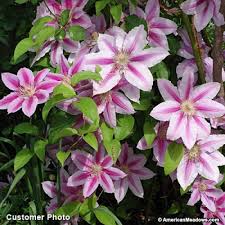
CLEMATIS is a member of the Ranunculaceae (Buttercup) family. It is a woody vine that wraps itself around whatever it finds in its path be it rock or tree. It has vibrant green foliage with striped cylindrical stems and opposite leaves that vary in shape and length according to the variety. The flowers have four sepals, numerous stamens and vary in color from white to ivory to a bluish purple. The vine can grow to be up to 100 feet long and blooms from April to June with the fruit appearing between July and September. There are around 350 species of clematisthroughout the globe. It is native to China but has naturalized in various climates.
Clematis has been used for centuries by Asian cultures for arthritic and rheumatic conditions and to help drive damp conditions from the body. It was used, also, for anxiety, migraines, uterine and ovarian cramping. The early Spanish Americans called it the 'herb of the goat' and decocted it to wash wounds. The Native Americans used the inner bark for fevers and both the leaves and bark for shampoo. They treated wounded horses with a decoction of the leaves. The fibers from the bark were used to make nets and snares. The King's American Dispensatory states that, Clematis virginiana has been highly spoken of as a nervine in uterine diseases... Clematis recta, being particularly useful in nervous insomnia, neuralgic and rheumatic headaches, toothaches, reflex neuroses of women from ovarian or urinary irritation, neuroses of men with pain in testicles and bladder, cystitis, urethritis, gonorrhea, orchitis and swellings of the inguinal glands.” In the 16th Century, it was powdered and used internally for bone pain. It was used by the early pioneers as a substitute for pepper and the root was ground up and dried and then used for shampoo.
Michael Moore (herbalist), once said of clematis that, “... a useful treatment for headaches in general and migraine and cluster headaches specifically... Most effective in classic migraines where there are head flushes or visual disturbances in advance of the actual headache and most effective then, when drunk at the first sign of these presymptoms. Some folks find the tea works better, some find the tincture more effective. Try both.”
The Virginia variety was used for all kinds of skin problems and venereal diseases. It was also used for cancers, tumors, nephrosis (kidney disease), scrofula (tuberculosis of the lymph nodes in the neck), gout, malaria, blood sugar and blood pressure issues and as an antidote for snake bites. Different species of the plant were used for different things. For instance, the Chinesis version used the roots for pain, fevers, cancer and as an antibacterial. Montana and Armandii varieties were used to promote lactation, urination and to stimulate menstruation. The Vitalba species was used for tooth pain (the branches were smoked like cigarettes for that), etc. Hunters would even use the fuzzy seeds to pack their boots in winter to keep their feet warm.

According to studies, clematis has a host of components that act as anti-inflammatory agents. The ethanolic extracts of three different kinds of clematis were found to inhibit the enzymes that cause inflammation. The strongest of those was clematis pickeringii, In animal studies the vitalba variety was found to reduce the sensitivity to painful stimula, as was the brachiata version. In point of fact, clematis brachiata was able to lower one's body temperature better than indomethacin (a medication used to treat the pain and inflammation associated with gout and rheumatoid arthritis).
In in vitro studies, clematis ganpiniana was found to be effective not only against breast cancer cells but also effective against E. coli, candida, staph, bacillus subtilis (the bacterium from hay and grass) and bacillus pumilus (spore bacteria found in soil).
Clematis Montana has been found to have antiviral effects against HIV and flus.
The Chinese Materia Medica says it is tasteless or slightly bitter and cold in nature. It is used on the meridians for the bladder, heart and small intestine. In traditional Chinese medicine it is typically used for mastitis, hepatitis, diabetes, lower back pain, cancer, arthritis, psoriasis, to induce labor and for digestive issues related to the esophagus and peristalsis. There are some indicators that clematis root may also revitalize beta cells which may help with Type I diabetes. (In Type I diabetes, the beta cells stop producing insulin �clematis seems to re-boot those cells to produce insulin again).
In a study done on 35 patients with viral hepatitis, 90% of them were found to get better when taking clematis.
Clematis is one of the Bach flower essences used for those who seem to live in a dream world and need to be grounded. These people are often considered airheads or 'not all there' and have a hard time focusing (would be good for anyone experiencing focus issues) and meeting obligations. Clematis helps to clear the mind and focus on the present. It is a part of Bach's famous rescue remedies.
Keep in mind that clematis is an acrid herb. This means that it burns and can cause severe reactions if used improperly. It is considered a poisonous plant as it is part of the buttercup family so great care needs to be used when employing this herb. It can cause skin redness, blistering and inflammation if not correctly used topically. Improper oral use can cause labored breathing, blistering, abdominal cramping, irritated kidneys, eye inflammation, weakness, bloody and painful urination, bloody diarrhea, vomiting of blood, dizziness, fainting, confusion and convulsions. If too much has been ingested it is suggested that the stomach be pumped and demulcents employed (slippery elm, marshmallow root, etc.). Generally, clematis is not to be used long-term.

This herb should never be used by: pregnant women, those with excessive urination, enuresis or those on blood pressure or blood sugar medications as it may cause those to drop too low.
ALWAYS CONSULT A PHYSICIAN BEFORE STARTING ANY HERBAL PRODUCT OR REGIMEN.
As is customary with all my posts, I am including some links below for your perusal.  Use them wisely.  Stay strong and healthy!


Sunday, March 12, 2017

POPPY

POPPY –Papaver Somniferum, Escholtzia Californica, Papaver Rhoeas, Papaver Orientale, etc.

Also known as: Opium poppy, Corn poppy, Breadseed, California poppy, Shirley poppy, Khuskhus, Flander’s poppy, Gasalu, Papi, Kaskash, etc.

Parts used: seeds, latex, flowers

Systems/organs affected: liver, heart, brain, nerves

Properties: analgesic, anodyne, astringent, emollient, sedative, expectorant, aphrodisiac, carminative, demulcent, anti-neuralgic, hypnotic, antispasmodic, febrifuge, nervine
         
            POPPY is a member of the Papaver family of which there are between 70-100 varieties.  They range in height from 8 inches to almost four feet and will have an assortment of colored flowers.  Perhaps the most well-known is the bright red to orange colored flowers with tall stems and hairy, oblong shaped leaves that are deeply divided.  Some varieties have leaves that resemble that of a carrot.  At the base of each petal is usually found a dark splotch of color although not always.  The flower is followed by a round pod that contains the seeds.  Opium poppies are native to the Mediterranean while corn poppies are native to Asia, Europe and North Africa.  All poppies can now be found globally.  The opium poppy contains a latex in the skin of the pod that contains several narcotic components such as codeine, heroin and morphine.
 
Poppies have been part of several cultures for millennia.  It was grown as an ornamental in Mesopotamia around 5000 BC. It was often associated with the Greek goddess Demeter who was the goddess of Agriculture and Fertility.  The Greeks believed if poppies grew in their crops that they would have a good year.  They have also been paired with the gods Nyx (night), Hypnos (sleep) and Thanatos (death) depending on what said cultures happened to believe.  It was found in many Egyptian tombs so there may be something to that.  In some ancient records it was indicated that people used the plant for euthanasia and to hasten death in old age.  Hippocrates and Dioscorides were both familiar with it and its many uses, including its use as a culinary agent.  They even distinguished between different varieties.  Pliny spoke of the medical uses of corn poppies and stated the leaves and pods were boiled in water to make a juice.  This was then pressed and rubbed (dried) to create tablets.  The latex was also dried and was the first actual use of opium.  It was used to ease respiratory conditions, promote sleep and to relieve indigestion.  Corn poppies symbolized blood and new life to the Egyptians.  Opium poppies found in tombs of the Egyptians were found to still have their potency after 1000 years.  (Which tells you the ability of this plant as an analgesic or anodyne).


Poppies are worn on Armistice Day in Britain in remembrance of those fallen in battle which became customary after Colonel John McRae penned the poem, “In Flander’s Fields”, describing the battlefields of WWI being covered with this flower where the earth had been disturbed to bury the dead.

Galen said that this is the strongest known plant for dulling one’s senses as well as inducing sleep.  (Anyone who has been subject to the prescription forms of opium knows this to be true).  He stated it was used to treat a number of conditions including lung issues and eye complaints.  It was well known even then to be a strong pain reliever.  Aside from the above listed, it has also been employed for alopecia and other hair issues, skin problems, digestion issues, cognitive function, red blood cell formation, bone health, nerve disorders, energy production, blood pressure, cardiac and cholesterol problems, immune support and as a possible agent for use against cancer.

Despite its many positive abilities, it has been employed by the pharmaceutical industry for quite some time for a vast array of things.  For instance, poppy seed oil is used as a carrier oil for iodine in pediatric medicine.  It is used as a contrast medium for HSG (hysterosalpingography), an X-Ray that is used to evaluate fertility in women.  The latex from the pod of the poppy is dried and used to produce the ever popular pain medications codeine and morphine.  It is also a chronic problem by drugs users worldwide using heroin.

Contrary to popular belief, the seeds do not contain vast amounts of narcotics.  Rather those come from the pod which holds the seeds.  However, the seeds can still mess up a drug test if a person ingests them-as well as a breath analyzer.  So just beware of that if your company requires mandatory random drug testing.  (Ha!)  Each gram of seed contains 14 mcg of codeine and 33 mcg of morphine.  While all poppy seeds are not the same, they will all help with a number of things the opium poppy is used for-not to mention they are loaded with nutrients.  They contain B Complex vitamins, vitamins C and E as well as iodine, calcium, magnesium, copper, iron, manganese, zinc, potassium, phosphorus, selenium, linoleic and oleic fatty acids, etc.

For every teaspoon of poppy seeds a person gets 4% of their daily allowance of phosphorus and calcium.  Both are required for bone maintenance.  Calcium is necessary for nerve impulse function, muscle contraction and a host of other things whilst phosphorus is needed by the body for DNA formation and energy production.  Iron and copper are both needed by the blood for the formation of red blood cells and oxygen transport.  The immune system needs iron to function optimally and it is used by the body for building proteins and neurotransmitters.  The fatty acids have been known to decrease bad cholesterol and the linoleic acid in particular helps to maintain the liver and heart and keep them in working order.  Poppy also contains fiber-something desperately needed by the digestive system for proper motility and bowel health.  The list goes on and on.  Poppy seed paste is said to be a great moisturizer for the skin.  Iodized poppy seed oil has been used for iodine deficiencies and to deliver chemotherapeutic substances to tumor locations.  A poppy seed poultice was employed for arthritis and rheumatic conditions and other inflamed areas.

There are different colors of poppy seeds as well-some are black, some are white or light grey and some are midnight blue, etc.  They are often roasted, toasted and/or baked with a number of pastries and dishes around the globe.  They can be found in muffins, breads, salad dressings, curries, chutneys, etc.

As poppy seeds are high in polyunsaturated fats they are susceptible to oxidation.  They should be kept in dark bottles in a cool place where they can remain fresh for up to 6 months.  Poppy seeds are considered safe when used for culinary purposes (even for pregnant women it said).  One medical site said that 1 tsp per 7 pounds of body weight is considered safe (so someone weighing 150 pounds shouldn’t eat more than 7 tablespoons of seeds at a time).  They also state that cooking the seeds lessens the narcotic content and soaking the seeds for 5 minutes before adding them to recipes is also believed to lessen their narcotic value.


There is no doubt that poppies have a place in our lives as both a food and a medicine.  One can still grow poppies but if choosing to grow opium poppies in particular you must obtain a permit from the Department of Narcotics in DC (due to the Poppy Control Act of 1942 which basically says that you have to have a permit to grow anything from which opium can be extracted-wonder if big pharma has a permit…).  It is considered illegal to grow opium poppies for the intent of medical use apparently.  You can grow other poppies for personal use and given the current state of things they may become a good investment.  As always, consult a physician before ever starting an herbal product or regimen.

As is customary with my posts I have included some links below for your perusal.  Use them as you see fit to.  Stay strong and healthy!


LILAC


LILAC –Syringa Vulgaris, Syringa Persica, Syringa Alba

Also known as:  Goat’s Rue

Parts used: leaves, flowers, fruit

Systems/organs affected: skin, immune, nervous, kidneys

Properties:  febrifuge, tonic, anthelmintic, anti-periodic, aromatic, edible, emollient, slightly astringent, antifungal, antibacterial, antidepressant

          Lilac is a member of the Oleaceae (Olive) family.  There are around 25 species of this family.  It is native to South Eastern Europe and Asia but can be found all over the globe now as a naturalized plant.  It is fairly cold tolerant as well.  Lilac is a bush that can get between 5-15 feet in height. (The difference between a bush and a tree is that trees stem from one main trunk while bushes usually have several trunks branching from them).  It has deep green leaves, oval column like clusters of flowers and leathery capsuled fruit.  The flowers come in a variety of colors these days from purple to white and red to yellow.  The flowers are hermaphrodite and are pollinated by moths, bees and butterflies.  This plant thrives in most soils but is partial to well drained alkaline loamy type soil.  The purple variety is the most well-known (Syringa Vulgaris) and the most widely used for medicinal purposes.

One cannot help but be happy around this plant.  The smell evokes a sense of happiness and for some-stimulates memories long forgotten.  Lilacs were introduced to this region by pioneers in the 1800’s that were traveling from the East.  That is why you can find them out in the sticks where human life has long since moved away.  Syringa comes from the Greek term ‘Syrinx’ and means ‘hollow tube or pipe’.  While lilac branches are not hollow, apparently they are easy to hollow out and were often used to make flutes or reed pipes anciently.  In Greek mythology, Syringa was the name of a nymph that mesmerized Pan-the god of forests and fields, with her beauty.  He chased the nymph through the forest but lost track of her as she turned herself into a lilac bush with the assistance of some friends. (Talk about trying to get away from someone…that is the extreme).  At this point Pan realizes he was clutching reeds from his heart’s desire-the lovely Syrinx.  His sighs combined with the wind and created music within the reeds.  Hermes suggested that Pan take the reeds and make them into different lengths and bind them together into a pan flute, which they called Syrinx in honor of his lost nymph.

Lilac symbolizes young love, wisdom and remembrance.  Its scent is often used to increase one’s mental abilities, promote harmony and help to unlock long repressed emotions.


The flowers are edible but there are two schools of thought.  Some say the purple are sweet while the white ones are bitter, some say the opposite is true.  I suppose every person has their own feelings on the subject so you will have to leave it up to your own taste buds.  Consuming lilac blossoms is not new.  According to ancient art the blossoms were consumed in Pompeii (was near Naples), Rome and in Greece as well.  Flowers were used to enhance the flavor of food as well as decorating the plate.  The French used them in salads and drinks as did other European countries.  As it turns out, edible flowers do have nutritional value-especially in regards to color.  The organic pigments (carotenoids) within floral plants contain a rare form of lutein not found in other foods.  Consuming blossoms has been found to improve vision and overall eye health and to reducing one’s chances of getting cataracts and/or macular degeneration.  The flowers have also been used for syrups and candied for pastries.

The medicinal use of the oil (which doesn’t exist now) started in the 19th century.  It was used to help get rid of intestinal parasites and as a tonic to prevent disease from occurring (anti-periodic).  It was also used quite often for fevers but it worked erratically so people (and doctors) stopped using it and as such this plant became more of an ornamental and its medicinal uses were lost.  Lilac oil was also used topically for sunburns, skin rashes, scrapes and a host of other skin maladies.  Today it is only found as a fragrance oil and is used in an assortment of cosmetic and cleaning products.

The leaves have been used in infusions to stop the recurrence of malaria, which aside from its use as a vermifuge, was its most common application.  One can make a cold infused floral water as well for a refreshing summer beverage.  Some references said that eating the flowers may help with gastric issues too. 

Lilacs were also believed to bring good luck-although the white lilac was associated with death.  I suppose this was due to the fact that lilacs were often found growing in cemeteries and the flowers were used to surround the dead to mask the smell of decaying flesh.  Pale purple was considered a color of mourning while dark purple was associated with Lilith (in some cultures this name is in reference to a class of female demons), which means ‘night’ and was often used by voodoo practitioners for casting spells.  Lilac was also associated in folk tales with love.  It was believed that if one could consume one petal after another of the 5 petaled tiny flowers without getting them stuck in one’s throat that their love was true.  It was also thought that if a branch was brought into the home in the fall and was able to bloom by Christmas that one’s future marriage was to be a ‘good match’.


In Japan the Airu (Inao) use lilac wood for the stem of the chief as it doesn’t rot easily.  The Inao are a type of whittled wands that are set up on the east side of Ainu lodges and would hold the skulls of an assortment of animals.  These were considered offerings to the gods and were honored.  The stems were regularly cleaned too keep them from decay too as it was believed that if they rotted that the person whose lodge had the rotting poles would also decay and die soon.

Lilacs were also believed to act as a protective shield against invasive psychic energy (I am guessing they could be used similarly to sage in that regard to ward off or scare evil spirits).  Some aroma therapists refer to lilac as a ‘stealth spiritual warrior’.
 
          There are a host of ways this plant can be used.  One can make a cold infused oil or a steam infused one-either process takes a lot of time and patience.  Teas are most commonly employed but you can also make honey, wine, cordials, syrups, ice cream and jellies from lilacs. 


          Lilacs may trigger skin issues if one is sensitive.  The skin becomes red and itchy and may develop hives.  So when in doubt, don’t use it.  Always consult a physician before starting any herbal product or regimen.

As is customary with all my posts I am including some links below for you information and entertainment.  Stay strong and healthy!

https://www.amazon.com/FRENCH-FASHIONED-Syringa-Vulgaris-Flower/dp/B004ZIA4GS/ref=sr_1_5?ie=UTF8&qid=1489342702&sr=8-5&keywords=lilac

https://www.amazon.com/Bloomerang-Purple-Reblooming-Syringa-Flowers/dp/B01C5SAXRO/ref=sr_1_11?ie=UTF8&qid=1489342702&sr=8-11&keywords=lilac

https://www.amazon.com/Aromatherapy-Hosley-Premium-Scented-Diffuser/dp/B0178BMPI8/ref=sr_1_13?ie=UTF8&qid=1489342702&sr=8-13&keywords=lilac

https://www.amazon.com/Deep-Steep-Argan-Butter-Blossom/dp/B00PATKB46/ref=sr_1_14_a_it?ie=UTF8&qid=1489342702&sr=8-14&keywords=lilac

https://www.amazon.com/Barnhouse-Lilac-Lilies-Premium-Fragrance/dp/B01B9AAF9K/ref=sr_1_2?ie=UTF8&qid=1489342702&sr=8-2-spons&keywords=lilac&psc=1

https://www.amazon.com/Mrs-Meyers-Liquid-Lilac-12-50/dp/B00YY01IV2/ref=sr_1_3_a_it?ie=UTF8&qid=1489342702&sr=8-3&keywords=lilac

https://www.amazon.com/Lilac-Girls-Martha-Hall-Kelly/dp/1101883081/ref=sr_1_7?ie=UTF8&qid=1489342702&sr=8-7&keywords=lilac

https://www.amazon.com/Wonder-Seeds-Syringa-vulgaris-646263360569/dp/B01J8LSCEC/ref=sr_1_16?ie=UTF8&qid=1489342702&sr=8-16&keywords=lilac

https://www.amazon.com/Cape-Shore-Lilac-Scented-Each/dp/B00KIQSY72/ref=sr_1_17_a_it?ie=UTF8&qid=1489342702&sr=8-17&keywords=lilac

https://www.amazon.com/HERITAGE-PRODUCTS-Flower-Water-Atomizer/dp/B0010WJAOY/ref=sr_1_22_a_it?ie=UTF8&qid=1489343036&sr=8-22&keywords=lilac