Saturday, January 2, 2016

WORMWOOD


Wormwood:  Artemesia Annua, Artemesia Nilagirica, Artemesia Tschernieviana, Artemesia Absinthium, Artemesia Douglasiana, Artemesia Ludoviciana, Artemesia Gilvescens, etc.

Also known as:  Sweet Annie, Sweet Wormwood, Mugwort, Roman Wormwood, Tarragon, Old Woman, Green Ginger, Absinthe, etc.

Parts Used:  leaves, flowers (sometimes the root but that seems to be rare)

Meridians/Organs affected:  skin, digestive, liver, blood, lungs, female reproductive, nervous system, stomach, gallbladder, immune

Properties:  anti-hemato-parasitic, antibacterial, anti-microbial, anti-tumor, anti-parasitic, anti-pyretic, emmenogogue, hepatic, digestive, vulnerary, anti-fungal, anti-inflammatory, anti-malarial, antiviral, bitter, anti-carcinogenic, anti-spirochetal, antioxidant, immuno-stimulatory, tonic, stimulant, aromatic, nervine, cholagogue

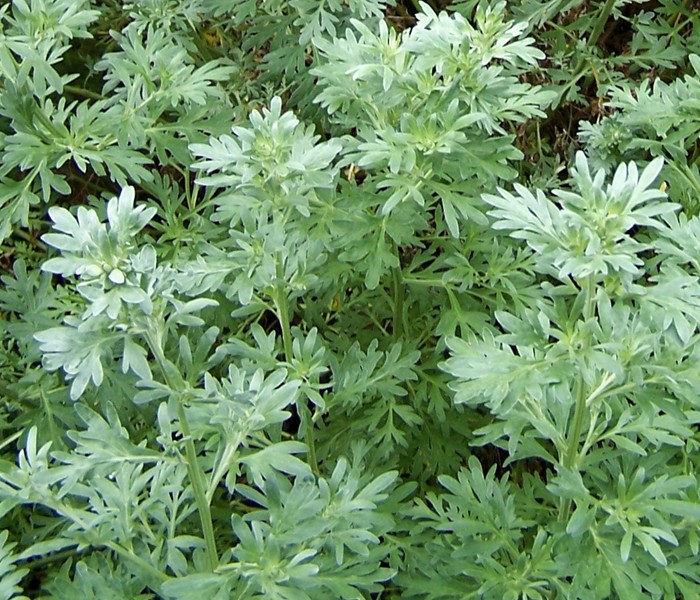
Wormwood is a member of the Compositae (Sunflower) family.  There are over 400 species of artemesia, some more medicinal than others for certain things. It smells like sage but it is of NO relation to the salvia species whatsoever. Wormwood, or should I say the species artemesia, vary in size and shape. It is an aromatic perennial that has grayish green leaves that alternate (generally). The flowers are yellowish green (some species are white) and bloom from June to October.  The undersides of the leaves often have fine hairs.  This class of plant is very bitter and as such are good for the digestive processes.  It is native to Europe, Asia and Siberia but can now be found all over the world in dry soiled climates.  It can be anywhere from 2-10 feet tall also depending on the variety.  Mugwort and tarragon are also in this class of plants.

It is believed that the artemesia plants get their name from Artemis (the Greek name for Diana) who gave the plant to man.  Others say it was named for the Queen of Caria, Artemesia, who used the plant for her own maladies to great benefit.  Wormwood is aptly named as it was used as a wormer for animals and children, in graineries to keep weevil at bay and as a common strewing herb to drive away fleas and other insects.  A decoction of the plant was also often employed as a floor cleaner in areas where sickness was prevalent.  It was once used in conjunction with other herbs as a vinegar on St. Luke's Day so one might catch a glimpse of their future mate (revealed supposedly only on that day through a vision when using this concoction).  In some places on the world on St. John's the Baptiste's Day, it is still used in large burning ceremonies to ensure protection from evil the following year for both man and beast. Dioscorides claimed it was good for intoxication.  Midwives in Middle Age France would bathe infants in wormwood juice so they would never get too hot or too cold for the rest of their lives (the legends that make one go hmmmmm....). In Egypt it was used to expel pinworms and relieve headaches.  John Josselyn believed it useful for seasickness and the early colonists used it to keep moths from eating their clothing.  The seeds were powdered and sprinkled amongst the pages of books to keep them from getting book lice and brewers would use it with hops to make their drinks more 'healthy'.  When pounded and mixed with fat from a bull it was said to heal problems with vision.  Linnaeus used it for gout, liver issues and scurvy.  It was also said to be good for stomach complaints and heart issues.  It is the base (or at least was the base before it was banned in many countries) for the alcoholic drink absinthe that can cause hallucinations, insanity and sometimes death in excess amounts.  (Hence the ban..).  The ancients used it as an antidote for hemlock and toadstool poisoning (which is something good to know).  The German word for wormwood is 'wermut' which means 'preserver of the mind' as it was once believed to enhance mental functions.

Wormwood contains a large amount of thujone in its oil which can cause a lot of issues and damage to the nervous system when used in excess.  It is also addictive and was banned for use in alcohol in most countries for this reason.  

Wormwood has been the source of many studies.  Most of the studies are focused on its effectiveness as a treatment for malaria.  There is a small place in China where the people hardly, if ever, have malaria and scientists found it was possibly due to the local plant life.  The people of this village, when believed they were coming down with malarial symptoms, would go out and chew on the leaves of a certain plant in their region and within a matter of hours they were better.  Come to find out THAT plant was wormwood.

Wormwood contains a chemical called artemisinin (as do most artemesia's), which is a very powerful anti-parasitic.  It is also what is called anti-hemato-parasitic, which means it will kill blood borne parasites.  Artemesia Annua is believed to be the most powerful of the species and has been found effective for topical use for skin infections and wounds, for digestive problems, menstrual issues, for reducing fevers, liver problems, parasites in the blood and liver (which would include liver flukes) and as a steam inhalant for respiratory complaints.  The activity as an antibacterial  is higher in the oils of the plant which do not disseminate easily.  In some studies the effectiveness of artemesia depended on the method of extraction (infusion, decoction, etc) as artemisinin is more soluble in fats and alcohol than water.  It is also more powerful as a fresh herb as a lot of the antioxidant capability is lost when dried (but it is still VERY powerful as a dried herb too).  THIS HERB SHOULD NEVER BE BOILED.  The Chinese who have used the plant for millenia would infuse it in water that was room temperature, then pound the herb and wring out the juice.  (Apparently according to studies, this method still produces the strongest infusions to date).  Depending on the extraction, artemesia's have proven effective against many gram positive and gram negative bacteria as well as fungal infections and a variety of cancers.  Its effectiveness is not merely due to the artemisinin but rather the many compounds that work synergistically within the plant.  While artemisinin has its benefits-when used alone it also has side effects such as nausea, vomiting, diarrhea, cramping and loss of appetite.  Artemesia Annua (also known as Sweet Annie) at last count has over 150 components with many flavonoids, sesquiterpenes and coumarins amongst them.  It is the most active artemesia against malaria as well.  It is more powerful when picked later in its growing period rather than earlier, so the chemical components have more of a chance to develop.  Wormwood (Artemesia Absinthium) is most effective for intermittent fevers, stomach issues, nervous system problems and as a wormer.  Wormseed (Artemesia Maritima-also known as Epazote) is specific for certain intestinal worms but overall most artemesia's are used similarly.  Mugwort is one of the mildest forms and the one most used for moxification (burning the plant near acupuncture points to help release toxins in the body), menstrual difficulties and hemorrhaging (although other artemesia's have also been used thusly).


This class of plant is best taken in high amounts for a small period of time and it should NEVER be used by a pregnant or nursing woman.  ALWAYS consult a physician before using this herb.

As is customary with my posts I am including some links herein for your perusal.  Stay healthy and strong!  


Saturday, December 26, 2015

CORIANDER

CORIANDER-Coriandnum Sativum

Also known as:  cilantro, rau ram, papaloquelite

Parts used:  leaves, seeds

Systems/Organs affected:  bladder, stomach, blood

Properties:  aromatic, diaphoretic, carminative, diuretic, alterative, pungent, depurative

Coriander is a member of the Umbelliferae (carrot) family.  It has slightly divided leaves that branch out on stems and can get over two feet tall.  The plant has small white to lavender colored flowers that bloom in late June and make way for brownish colored seeds about the size of peas.  The seeds should be gathered before they get too old and the plant reseeds itself or dies off.

Coriander is an herb that dates back thousands of years.  It was grown in Egyptian gardens long before the time of Christ and has been found as part of funeral offerings in Egyptian tombs (including King Tut's).  Hippocrates spoke of using it in the 5th century and the Chinese didn't acquire it until some time after that.  Pliny described it as a 'very stinkinge herb' as it is quite odiferous as it grows throughout the season.  The generic Greek term for coriander 'koris' means 'bug'  as it tends to repel them until it starts to go to seed, at which point the odor changes to something more citrus like.


Coriander was highly prized by many cultures and was even mentioned a few times in the Bible, being compare to manna.  In Exodus 16:31 it reads, "And the house of Israel called the name thereof Manna, and it was like coriander seed, white; and the taste of it was like wafers made with honey."  It was described as an aphrodisiac in 'Thousand and One Nights' as it can be somewhat narcotic in large amounts.  There were also stories that if one mixed it with fennel that it would conjure up the devil and his demons (you can't make up this stuff...).  While this is anything but the truth, coriander and fennel don't like each other in the garden and should be planted far from one another.  Coriander was also one of the very first herbs to be brought to the New World.  Dioscorides claimed it would calm the body and Galen used it as a tonic.  Its primary use today however, is as a culinary herb.  As it has ancient origins the Hebrews use the herb as part of the Passover spices.  The Indians, Chinese and Thai people's all use it in a vast array of curries and as part of the famous garam masala.  It is commonly used in breads, cakes, soups, salads, meat dishes, etc.


Coriander does have many medicinal benefits (although to some they would say it has none).  It has been added to gripe water and many a laxative combination over the years to help ease the cramping and flatulence that often accompany such formulas.  Dr. LeClerc believed it helped to fight fatigue and Madame Maury used it for fevers and rheumatic complaints.  Both the leaves and seeds are good for the urinary tract, for upset stomach, gas and indigestion.  The oil from the seeds has been used for toothaches, facial cramping, facial neuralgia and shingles associated with facial neuralgia.  The oil itself does have some narcotic effects in large amounts.  There was an herb distillery that had first hand experience with this when 50 quarts of the oil was spilled in the factory and they sent workers to clean it up.  Within 30 minutes they all had started laughing and giggling and then became aggressive and started fighting with each other (and completely forgot what they were doing there).  All of the workers had to be sent home for several days to recover from the intoxicating effects of the oil (and the extreme fatigue that followed).  Coriander has also been used to flavor gin, vermouth, liqueurs, chilies, etc.

As is customary with my posts I am including some links herein for your perusal.  Use them as you see fit.  Stay healthy!

http://www.amazon.com/Starwest-Botanicals-Organic-Coriander-Pound/dp/B00ZAVETNS/ref=sr_1_3?ie=UTF8&qid=1451158391&sr=8-3&keywords=coriander

http://www.amazon.com/Frontier-Coriander-Seed-Powder-Ounce/dp/B001VNEC68/ref=sr_1_6?ie=UTF8&qid=1451158465&sr=8-6&keywords=coriander

http://www.amazon.com/Coriander-Therapeutic-Essential-Edens-Garden-/dp/B0046ZUW7G/ref=sr_1_24?ie=UTF8&qid=1451158572&sr=8-24&keywords=coriander

http://www.amazon.com/Spicely-Organic-Coriander-Seed-Compact/dp/B00I7V578O/ref=sr_1_25?ie=UTF8&qid=1451158607&sr=8-25&keywords=coriander

http://www.amazon.com/doTERRA-Coriander-Essential-Oil-15/dp/B0016BZ7QY/ref=sr_1_30?ie=UTF8&qid=1451158607&sr=8-30&keywords=coriander

http://www.amazon.com/Coriander-Troubles-Thoroughly-Digestive-Systems-ebook/dp/B00KK89GIO/ref=sr_1_41?ie=UTF8&qid=1451158690&sr=8-41&keywords=coriander

http://www.amazon.com/Cucina-Coriander-Olive-Purifying-Refill/dp/B00023DIBI/ref=sr_1_48?ie=UTF8&qid=1451158804&sr=8-48&keywords=coriander

http://www.amazon.com/Cilantro-Chinese-Parsley--Coriander--Seeds/dp/B00AX2IOEY/ref=sr_1_77?ie=UTF8&qid=1451158935&sr=8-77&keywords=coriander


BUCHU


BUCHU-Barosma Betulina, Barosma Eckloniana, Agathosma Betulina, Diosma Ericoides, Barosma Crenulata, Barosma Serratifolia, Diosma Betulina, Agathosma Crenulata

Also known as:  bookoo, round buchu, short leaved buchu

Parts used:  leaves

Systems/Organs affected:  bladder, stomach, lung, urinary, prostate, kidney, digestive

Properties:  diuretic, tonic, stimulant, diaphoretic, aromatic, antiseptic, carminative, astringent, vulnerary, emetic (in large doses), cathartic (in large doses), bitter, antibacterial, antimicrobial, anti-inflammatory

Buchu is a member of the Rutaceae family (Rue).  It is a deciduous shrub that is found mainly in south africa.  It has white and sometimes pink, 5 petaled flowers that grow in a cluster on a woody stalk and has rounded leaves (or long leaves depending on the variety).  The plant gets between two and three feet tall and is covered in oil glands (on the leaves) and is fairly aromatic.  Some would say it smells like peppermint while others get a more camphor like scent.

Buchu was first believed to have been used by the Hottentots of South Africa centuries ago for a vast array of issues pertaining to the urinary system in particular.  The early Dutch settlers in Africa made a brandy tincture that is still in use today by many cultures there.  It became popular as a cure for hangovers in the 1800's and was also used in many concoctions for colds and coughs.  The leaves were often mixed with oil and used as a perfume.


Jethro Kloss said it was one of the best herbs for urinary issues and for the first stages of diabetes (it is said that it helps to rejuvenate the pancreas).  It has also been used as a mouthwas for bleeding gums and soreness in the mouth, for bedwetting (combined with horsetail), arthritis, hypertension, nephritis, urinary infections, inflammation of the mucus membranes (in the sinus, prostate, vagina, colon, for ulcers, etc.), for kidney and gall stones, chronic rheumatism, spermatorrhea, backaches, chronic bronchitis, cystitis, painful urination, gout, gonorrhea, etc. It has been used in topical applications for bruises and to clean wounds (as a vinegar) and as a douche for leucorrhea and yeast infections.  It is high in calcium, zinc, chromium, cobalt, iron, magnesium, manganese and more.  It works best as a cold infusion and should never be boiled.  It is also said to be contraindicated for urinary and kidney infections (despite the fact it has been used for that for millenia).  Do not use if pregnant or on diuretic drugs which will lower one's potassium levels even further.

As is customary with my posts I am including some links herein for your perusal.  Use them wisely and well.  Stay healthy!

http://www.amazon.com/Herb-Pharm-Certified-Organic-Extract/dp/B0006O2KH6/ref=sr_1_1?ie=UTF8&qid=1451155483&sr=8-1&keywords=buchu

http://www.amazon.com/Buchu-Essential-30ml-Therapeutic-Grade/dp/B00SVY3QMQ/ref=sr_1_2?ie=UTF8&qid=1451155527&sr=8-2&keywords=buchu+essential+oil

http://www.amazon.com/Buchu-Leaf-Organic-56-Grams/dp/B008CH09RC/ref=sr_1_4?ie=UTF8&qid=1451155483&sr=8-4&keywords=buchu

http://www.amazon.com/Starwest-Botanicals-Organic-Buchu-Powder/dp/B00BON5SV8/ref=sr_1_6?ie=UTF8&qid=1451155483&sr=8-6&keywords=buchu

http://www.amazon.com/Christophers-Formula-Original-Bladder-Count/dp/B00028Q20C/ref=sr_1_7?ie=UTF8&qid=1451155483&sr=8-7&keywords=buchu

http://www.amazon.com/Buchulife-Sport-Gel-Buchu-Oil/dp/B00VL1IMKC/ref=sr_1_10?ie=UTF8&qid=1451155483&sr=8-10&keywords=buchu

http://www.amazon.com/Exotic-Plants-Agathosma-betulina-buchu/dp/B00UXFDD6U/ref=sr_1_25?ie=UTF8&qid=1451155710&sr=8-25&keywords=buchu

http://www.amazon.com/Cape-Kingdom-Supplements-vegi-caps-Buchulife/dp/B00IYBV8AS/ref=sr_1_31?ie=UTF8&qid=1451155757&sr=8-31&keywords=buchu


Thursday, May 21, 2015

BLACK COHOSH


Black Cohosh:  Cimicifuga Racemosa

Also known as:  Bugwort, Black Snakeroot, Rattleroot, Squawroot, Bugbane, Richweed, Rattlesnake Root, Schwarze, Schlangenwurzel

Parts Used:  roots

Meridians/Organs affected:  liver, stomach, nervous system, spleen, large intestine, female reproductive, heart, respiratory, circulatory

Properties:  nervine, emmenogogue, antispasmodic, diaphoretic, alterative, astringent, expectorant, diuretic, cardiac stimulant, stomach tonic, arterial sedative, antiseptic, antivenomous, bitter, estrogenic

Black Cohosh is a member of the Buttercup family.  It is a triangular leafed plant (that divides into leaflets) that can get up to 9 feet tall and has tall slender cylindrical spikes of white flowers that look better than they smell.  It has a clump forming root that is rather woody and odiferous.  It is a perennial plant native to the Eastern region of North America.  It can be found growing in rich open woodlands although many a gardener grows it as an ornamental.  It blooms from May to August and forms seed pods that when shaken sound similar to a rattlesnake.  The roots are bests gathered from 10 am - 3 pm from July to September when they are at their peak medicinally.  The roots is also far more useful when fresh rather than dried or dried and then used SOON thereafter.

The Latin botanical term for this herb 'cimex' and 'fugere' means 'to drive away bedbugs' which it has been known to do for quite some time-hence its other names of bugbane or bugwort.  Many a gardener uses this plant to repel insects from other plants.  The Native Americans referred to it as 'black snakeroot' as they used the bruised root to treat snake bites among other things.  The Dakotas, Winnebagos and Penobscot Indians used it internally in decoction form for diarrhea, coughs, irregular menses and lung complaints.  The Native Americans were also responsible for teaching the early pioneers how to use this plant.  One late 18th century indian guide was quoted as saying, "It is one of our very best remedies in a great many womb troubles."  In the 1870 US Dispensatory it states that 'No doubt black cohosh also contains, when fresh, a volatile principle, with which its virtues may be in some degree associated, as we are confident that it is more efficacious in the recent state than when long kept."  In fact, the early settlers would pour whiskey over the roots and drink the extract to treat rheumatism, and in the 19th century this was used as a treatment for rheumatism in hospitals in NY but they eventually eliminated this altogether.  It was listed in the US Pharmacopia from 1820-1936 and in the National Formulary from 1935-1950.  It has been used for smallpox, scarlet fever, measles, scrofula, whooping cough, epilepsy, tinnitus, asthma, hysteria, arthritis, bronchitis, menopause, angina pectoris, sciatica, rheumatism, gonorrhea, sexual weakness, spermatorrhea, seminal emissions, female reproductive problems, intercostal myalgia, etc.


Black Cohosh contains salicyclic acid (a common component in willow and modern day aspirin) and cimicifugin which has been shown to be sedative and antispasmodic in nature (when using the fresh root).  In Chinese medicine it is known as 'sheng ma' and is used often for fevers, colds, asthma and a host of eruptive diseases (measles, etc).  It is used to tone the uterus and prepare one for childbirth.  It has been shown to be effective in reducing the levels of mucus in the bronchials and lungs as well as lowering the blood pressure and cholesterol.  As it is estrogenic it has also been proven to help with hot flashes, morning sickness, cramping and many menopausal complaints.  It is widely used for neuralgic type conditions.  It contains a component called anemonin which has been shown to depress the nervous system.  Thus it has been used for headaches, sciatica and tinnitus.  Dr. Felter (an early eclectic physician) said it was 'an ideal regulator of uterine contractions during labor'.  Jethro Kloss said it is a good remedy for spinal meningitis, poisonous snake and insect bites and delirium tremens (withdrawal from alcohol).  Dr. Christopher stated it had a strong effect on the muscular system and used it often for arthritis, rheumatism and neuralgia in combination with other herbs.  This herb is also commonly used in China to counter prolapse of the stomach, bladder, uterus and intestine and to raise one's chi.  Pregnant women are advised against using this herb unless it is in the last two weeks before delivery as it can stimulate uterine contractions.  It is also known to ease the delivery.  This is also an herb best taken in small amounts over brief periods of time.  Common signs of overdose are dizziness, nausea and vomiting.  As an interesting side note-black cohosh has a fair amount of B5 (pantothenic acid) which is also known as the 'happy vitamin) and as such has been found useful for depression.

As is customary with my posts I am including some links below for your perusal. Use them wisely....

http://www.amazon.com/Natures-Way-Black-Cohosh-Capsule/dp/B00CQ7PXXE/ref=sr_1_1?ie=UTF8&qid=1432264536&sr=8-1&keywords=black+cohosh

http://www.amazon.com/Spring-Valley-Menopause-Nighttime-Advanced/dp/B001QRZ10U/ref=sr_1_5?ie=UTF8&qid=1432264581&sr=8-5&keywords=black+cohosh

http://www.amazon.com/Natures-Answer-Alcohol-Free-Cohosh-1-Fluid/dp/B000N84G8Q/ref=sr_1_6?ie=UTF8&qid=1432264581&sr=8-6&keywords=black+cohosh

http://www.amazon.com/Gaia-Herbs-Cohosh-Liquid-Phyto-Capsules/dp/B00F1J75GC/ref=sr_1_9?ie=UTF8&qid=1432264581&sr=8-9&keywords=black+cohosh

http://www.amazon.com/Black-Cohosh-Root-Tea-Organic/dp/B0011DTL8M/ref=sr_1_29?ie=UTF8&qid=1432264757&sr=8-29&keywords=black+cohosh

http://www.amazon.com/Emerita-Phytoestrogen-Cream-Cohosh-2-Ounce/dp/B000070IWK/ref=sr_1_39?ie=UTF8&qid=1432264777&sr=8-39&keywords=black+cohosh

http://www.amazon.com/Black-Cohosh-Root-Sifted-Organic/dp/B004D7J2IM/ref=sr_1_43?ie=UTF8&qid=1432264777&sr=8-43&keywords=black+cohosh

http://www.amazon.com/Pure-Encapsulations-Black-Cohosh-120s/dp/B0017T6VGA/ref=sr_1_47?ie=UTF8&qid=1432264777&sr=8-47&keywords=black+cohosh

http://www.amazon.com/Alvita-Organic-Black-Cohosh-Count/dp/B00073IV6K/ref=sr_1_34?ie=UTF8&qid=1432264777&sr=8-34&keywords=black+cohosh

WILLOW


Willow:  Salix Alba, Salix Nigra, Salix Geyeriana, Salix Discolor, Salix Purpurea, Salix Bebbiana, Salix Atrocinera, etc.

Also known as:  Willow Bark, Withe, White Willow, Black Willow, etc.

Parts Used:  leaves, bark

Meridians/Organs affected:  stomach, liver, kidneys, heart, structural, nervous, circulatory

Properties:  tonic, astringent, antiseptic, diaphoretic, anodyne, antiperiodic, diuretic, febrifuge, anti-inflammatory, analgesic, alterative, vermifuge

Willow is a member of the Selicaeae family.  (Incidentally so is Poplar which can also be used similarly to Willow).  It is a deciduous shrub/tree with round to lance like leaves with several trunks that branch off from the base.  The flowers are referred to as 'catkins' and appear along branches as a furry like pod in the early months of the year (February to March) when snow is still on the ground.  The bark ranges in color from gray to brown and should be gathered in the spring before new growth starts.  The more it smells 'skunk-like' the more potent it is as a medicine.  Cut 15-20, one inch strips to the cambium layer (the inner bark) and remove them from the shrub to dry or to be used fresh.

The Latin term for willow 'salix' comes from 'salio' which means 'to spring up'.  Salix itself actually comes from the Celtic word 'salis' which means 'near water' no doubt referring to where it is found most of the time.  References to willow and its uses go back several millenia.  It is mentioned quite often in Sumerian writings 4000 years ago and an Egyptian papyrus as well as Assyrian tablets.  Galen used it to help inflammatory eye conditions, Hippocrates for fevers and pain management and Dioscorides for gout, earaches and corns. The native american indians used it for rheumatic complaints, fevers, chills, sore muscles and headaches.  In the 1700's it was commonly used to treat malaria.  Then in 1827 a French chemist named LeRoux isolated the active component in willow which is salicin.  The rest is history-it was eventually synthesized (1890's) into acetylsalicyclic acid more commonly known as aspirin and a billion dollar business was born.


Willow was also used early on to stop diarrhea, help toothaches (it was chewed) and to stop bleeding.  It is interesting to note that willow doesn't typically irritate the stomach like aspirin can, nor does it thin the blood like aspirin.  Many cultures have used it to treat diarrhea, dysentery, dyspepsia, gonorrhea, edema, worms, ovarian pains, recurring fevers and gastrointestinal issues.  A tea made from the buds has been used for heartburn, stomach complaints, cancer, eczema, gangrene, nosebleeds, bleeding wounds and to increase urine flow.  In some studies it has been shown to delay cataract formation.  A tea from the bark was boiled and used topically for insect bites, ulcers, rashes, minor burns, warts, corns, cuts and skin cancers.  The Romans would burn willow branches and use the ash for skin conditions and the leaves were mashed and soaked in wine and then consumed to stay lustful behavior (it was thought that too much of said concoction would make one impotent as well).  The bark was chewed to prevent cavities (it is VERY bitter and tastes like skunk so be forewarned) and the leaves and twigs were boiled to make a hair rinse for dandruff. It is true that willow has an abundance of medicinal value but it is also a very practically used herb as well.  Willow is flexible and so has been used for fish and fox traps, back rests, pins and pegs, frames for sweat lodges, baskets, mattresses, walking sticks, snowshoes, meat racks, cradle boards, fishing nets, twine, etc.

It is one of the Bach flower essences used for people who are bitter, offended easily, feel slighted or are always disappointed.  Willow should not be taken if you have an allergy to aspirin.  Do not take if pregnant (use your own discretion or consult a physician).

As is customary with my posts I am including some links herein for your perusal.  Use them wisely and stay healthy!

http://www.amazon.com/drooping-branches-distinctive-Hydrangeas-Evergreens/dp/B00LTEWCF2/ref=sr_1_1?ie=UTF8&qid=1432261853&sr=8-1&keywords=weeping+willow

http://www.amazon.com/Pussy-Willow-Tree-live-Plant-landscaping-garden-Root-/dp/B00BWV4UOS/ref=sr_1_fkmr1_1?ie=UTF8&qid=1432262018&sr=8-1-fkmr1&keywords=pussy+willow+herb

http://www.amazon.com/Natures-Way-White-Willow-Capsules/dp/B0001VWBGE/ref=sr_1_1?ie=UTF8&qid=1432262114&sr=8-1&keywords=salix+alba

http://www.amazon.com/Natures-Answer-Alcohol-Free-Willow-1-Fluid/dp/B00014H5OE/ref=sr_1_2?ie=UTF8&qid=1432262122&sr=8-2&keywords=salix+alba

http://www.amazon.com/White-Willow-flores-Liquid-Herbalgem/dp/B009EXQI9Q/ref=sr_1_13?ie=UTF8&qid=1432262122&sr=8-13&keywords=salix+alba

http://www.amazon.com/Salicin-Vegetable-Capsules-Boswellia-Pharmaceutical/dp/B00TOZM85C/ref=sr_1_17?ie=UTF8&qid=1432262249&sr=8-17&keywords=salix+alba

http://www.amazon.com/Willow-Balm-Natures-Aspirin-Topical-Painkiller/dp/B0098AYFHW/ref=sr_1_9?ie=UTF8&qid=1432262324&sr=8-9&keywords=white+willow+bark

http://www.amazon.com/White-Willow-Bark-Powder-Wildcrafted/dp/B002DXU24Q/ref=sr_1_22?ie=UTF8&qid=1432262345&sr=8-22&keywords=white+willow+bark

http://www.amazon.com/dp/B00LOX2SHA?psc=1

http://www.amazon.com/White-Willow-Bark-Sifted-Organic/dp/B000UY86Z2/ref=sr_1_3?ie=UTF8&qid=1432262345&sr=8-3&keywords=white+willow+bark

http://www.amazon.com/Bach-Flower-Remedies-Essences-Willow/dp/B008XTS43U/ref=sr_1_1?ie=UTF8&qid=1432262510&sr=8-1&keywords=willow+bach+flower+essence

Sunday, March 22, 2015

PAU D'ARCO


PAU D'ARCO:  Tabebuia Impetiginosa, Tabebuia Heptaphylla

Also known as:  Taheebo, Tabebuia, Lapacho, Purple Lapacho, Ipe

Parts used:  inner bark

Meridians/Organs affected:  pancreas, digestive, skin, blood, liver, lungs, structural, circulatory

Properties:  anti-fungal, anti-parasitic, digestive, anti-carcinogenic, antibacterial, alterative, hypotensive, bitter tonic, anti-tumor, anti-diabetic, astringent, depurant, diuretic, anti-pyretic

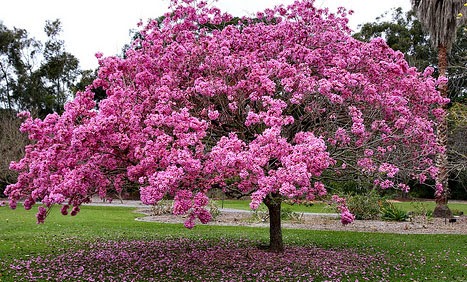
Pau d'arco is a member of the Bignoniaceae family which is a species of plants known for their woody and/or vine-like nature.  It does indeed have very hard wood and is used by the native south american indians for their hunting bows.  It is a deciduous tree that grows mostly in Argentina and Brazil but can be found in other parts of Central and South America, the Bahamas and even India.  It can get up to 150 feet tall and be 6 feet in diameter.  There are several different varieties of pau d'arco that are readily identified by their floral colors and/or leaf configurations.  The trees with red, pink or violet flowers were the preferred medicinal types while the yellow flower types were considered far inferior.  The commonly accepted variety for medicinal use now is the violet flowered taheebo from Argentina (Tabebuia Heptaphylla).  Argentina is the main supplier of the violet kind while Brazil supplies the red and yellow varieties.  The inner bark is what is used as a medicine and peeled in vertical strips from the tree and then meticulously separated from the outer bark for use.

Pau d'arco is one of those herbs that deserves a second look.  The Calloway indians in South America (thought to be the descendants of the Incas), have used this herb for eczema, fungal infections, psoriasis, hemorrhoids, skin cancer and a number of other ailments.  As they were able to use it successfully for a vast array of things it came under the scrutiny of modern science.  A Dr. Meyer from Argentina was taught by the Calloway how to use the plant and he in turn used it to cure 5 of his own leukemia patients.  The Municipal Hospital of Santo Andre' picked up the talisman in 1960 and began using it on terminal cancer patients.  Within 30 days most of the patients found their tumors gone or significantly decreased in size and they experienced little to no pain.  Since that time the bark has been used routinely at that hospital for leukemia and other viral diseases.  This of course caused word to spread and doctors at the American Cancer Society conducted studies on a few isolated napthaquinones which were found to have no anti-tumor effects in vitro at all.  Thus the book was closed on pau d'arco for cancer here in the united states.  The Indians used a decoction of the inner bark that included ALL the components of the herb and found it quite effective for healing.  (Once again showing that an herb is more than just a sum of its parts).  A tea from the bark was used to purify the blood, for fevers, ulcers and rheumatic conditions.  It is a powerful anti-fungal and has been used for candida, athlete's foot, vaginitis, and a host of other yeast based infections.  Even in the Amazon where it grows there is no moss, lichen or fungi growing on the bark.


Pau d'arco was also studied by the National Cancer Institute which said that too much of it can cause internal bleeding or poisoning (and chemo and radiation don't do that right????).  The Naval Medical Research Institute also did a study in 1974 and found it to be effective against parasites.

Pau d'arco contains a compound called lapacho which is considered toxic by the USDA and is RESISTANT to nearly ALL types of HARMFUL ORGANISMS. (Oh gee, can't figure out why in the world it would be considered a terrible thing to give someone who is seriously ill...let's give them radioactive chemicals through a shunt in their heart instead...sarcasm emphasized here).  It has been used for over 1500 years by native tribes without harmful effects.  Multiple studies have found it to protect against an assortment of wounds and skin infections, including staph.  It has been used for allergies, to lower blood sugar, digestive problems, ulcers, gonorrhea, leukemia, rheumatism, cystitis, Parkinson's, ringworm, osteomylitis, colitis, lupus, leucorrhea, anemia, hemorrhages, Hodgkin's, polyps, arteriosclerosis, gastritis, prostatitis, asthma, bronchitis, colds, flu, syphilis, wounds, hernias, H1N1, HIV, AIDS, joint pain, boils and many other things.  Like anything, this herb is only as good as the quality of its bark.  There are many products on the market that are sold as pau d'arco that are anything but....so pay attention to the Latin and the country of origin, get only the Argentinian variety or at least the Latin variety of Tabebuia Heptaphylla.  If you are on blood thinners don't take this herb as it can be contraindicated.  Do not take if you are pregnant.

As is customary with my posts I am including some links herein for your perusal.  Use them wisely.  Stay strong and healthy!

http://www.amazon.com/Pau-DArco-Bark-Wildcrafted-Sifted/dp/B002DXZHPA/ref=sr_1_1?ie=UTF8&qid=1427046317&sr=8-1&keywords=pau+d%27arco+tabebuia+heptaphylla

http://www.amazon.com/Pau-dArco-Immune-Power-Forest/dp/0892814977/ref=sr_1_2?ie=UTF8&qid=1427046317&sr=8-2&keywords=pau+d%27arco+tabebuia+heptaphylla

http://www.amazon.com/Treating-Cancer-Herbs-Integrative-Approach/dp/0914955934/ref=sr_1_11?ie=UTF8&qid=1427046519&sr=8-11&keywords=tabebuia+heptaphylla+pau+d%27+arco

http://www.amazon.com/Hobe-Laboratories-genuine-Argentine-54-Count/dp/B004ET5SZA/ref=pd_sim_gro_1?ie=UTF8&refRID=0W8CHWWYW3GVEPTSNVG8


Sunday, March 8, 2015

HAWTHORN


HAWTHORN:  Cratageus Douglasii, Cratageus Oxyacantha, Cratageus Monogyna, Cratageus Pinnatifidia

Also known as:  May Bush, Haw, Thorn Apple Tree, Quick-set, White Thorn, Black Hawthorn, River Hawthorn, Midland Hawthorn, etc.

Parts Used:  flowers, berries, leaves

Meridians/Organs affected:  heart, kidneys, skeletal, blood, spleen, stomach, liver, circulatory

Properties:  antispasmodic, tonic, sedative, digestive, cardiac tonic, emmenogogue, anti-diarrheic, diuretic, astringent, bitter, anti-hypertensive, nutritive

Hawthorn is a member of the Rose family.  It is a deciduous tree that can get up to 30 feet tall and is densely branched.  It has ovately shaped leaves that are lobed in a variety of ways which make identifying the variety of hawthorn more complex.  The leaves can get up to 2 inches long.  The flowers appear in late spring (April to June) and are white to pinkish in color, have 5 petals and several stamens.  These are followed by bright red or black berries depending on the variety in late summer of early fall.  The berries have seeds much like rose hips (one or two seeds is the wild hawthorn variety, if there are more than that it has been hybridized or crossed with another type).  The thorns on this tree are long and sometimes slightly curved in nature.  If you have ever been gauged by this plant you never forget it.  There are over 200 species of this tree (although cross pollination would put it more like 800) that are found from Alaska to New Mexico and across the eastern states of North America.  Hawthorn can also readily be found throughout Europe and Asia now too.  It is often grown as an ornamental as it produces a thick hedge which also provides a happy home to many birds and other small wild life.  It can be found readily growing in open meadows and fields but will grow in many types of places.

This plant has quite a history.  The Mayflower was actually named for hawthorn as it was also once called the 'May blossom'.  Going 'a-maying' was a common pagan ritual practiced anciently where a 'May Queen' was chosen in the spring as part of a fertility ritual.  She was then killed in the fall after the harvest season (no prom competition for THAT spot I bet).  During this time of 'a-maying', branches of hawthorn were cut and used to decorate doorways to ward off evil spirits said to be active during those festivities.  Bringing hawthorn into the house was bad luck and thought to bring doom on the inhabitants (illness or certain death).  This may be due to the smell that comes from hawthorn.  Unlike most flowering shrubs that have lovely scents or even no scent, hawthorn smells like rotten flesh or a decaying corpse (mmmm....just makes you want to eat something doesn't it...).  In ancient records it was said that the scent reminded one of the smell in London in the mid 1600's when it was hit by plague and over a sixth of the city succumbed to death in one year.  


Cratageus comes from the Greek word 'kratos' which refers to the hardness of the wood.  The term is appropriate as many a walking stick has been made from its branches.  It is also interesting to note that the Chinese have used it to soften hard substances during cooking (such as old chickens perhaps).  The Celts believed that hawthorn was a place that fairies lived and some think the burning bush Moses spoke to was in fact a hawthorn.  Christ's crown of thorns was said to have been made from hawthorn and fishermen often used it for fish hooks and awls.

Medicinally hawthorn has been used for a variety of things.  The Chinese have used the berries and flowers for digestive complaints for millenia.  It wasn't until more recently they adopted the western use of the herb for cardiac issues.  In fact it is well accepted as an effective cardiac tonic throughout the world by holistic practitioners.  There have been many studies throughout history that verify its use for hypertension, hypotension, angina, arteriosclerosis, palpitations, arrythmias, etc.  It has also been used for insomnia, kidney diseases, diarrhea and dysentery (for which the inner bark of the tree was used).  There are many accounts of hawthorn being used for cardiac complaints.  Perhaps the earliest ones began with Dr. Green in Victorian era Ireland.  He has amazing results treating people with a mysterious tincture that he refused to divulge to anyone.  In 1894 after he died, his daughter let it be known that he had been treating people with a hawthorn berry tincture.  A Dr. MC Jennings gave an account in 1917 of a 73 year old man who had a pulse rate of 158 and severe edema in his lower extremities.  He gave the gentleman a glass of water with 15 drops of hawthorn and within 15 minutes the pulse rate had dropped by 30 points.  In another 25 minutes the pulse rate was 110 and was much stronger.  He gave him another glass of water with 10 more drops of hawthorn and in one hour the man was able to lie down on a bed without pain, something he hadn't been able to do in a few weeks.

Hawthorn is a vasodilator that unlike modern pharmaceuticals is safe for long term use.  In fact, many use it as a preventative for cardiac and circulatory ailments.  Hawthorn can lower blood pressure or heighten it depending on what the body needs.  It can help dissolve deposits and plaque assisting with any number of conditions related to the heart and circulatory system. 

Hawthorn is rich in B vitamins, vitamin C and bioflavonoids which help to strengthen the blood vessels and the heart muscle.  In China, a decoction of the berries is used for gallbladder issues and irritable bowel.  The dried berries have also been used for infants with indigestion.  The Native American Indians used it for rheumatism and as a digestive aid.  In some cultures it is consumed to help the body to digest meat.  Perhaps the most astonishing account I came across in my research of this plant had to do with MS (mulitple sclerosis).  Alma Hogan Snell, author of 'A Taste of Heritage, Crow Indian Recipes and Herbal Medicines' gives an account of a man who approached her while she was visiting DC.  He explained his son had been diagnosed with MS.  He was a musician and was no longer able to play his music and lost his livelihood which left him devastated.  She told the man to give his son hawthorn because she knew it strengthened muscles.  The next month when she returned to DC the man approached her once again.  He told her his son was back to playing music and back to work.  His son continues to take hawthorn to this day and won't be without it.  The Crow indians refer to this herb as 'Beelee Chi Sha Yeah'.  Hawthorn also acts as a sedative to calm the body and help with anxiety, mood swings, hyperactive children or those with ADHD.

Hawthorn is high in pectin and has been used for centuries in jams, jellies, syrups, etc.  It was used to make berry spread and pemmican and in soup with deer fat.  The berries and flowers have been used to make wine, juice, teas and other cold beverages.  Too much hawthorn can cause dizziness, nausea and vomiting.  People who are on heart medications should consult their physician before using it.  It is also advised that pregnant women shouldn't take it as it can stimulate the uterus.


Hawthorn works well when combined with yarrow for thrombosis or clotting, as a general tonic for the heart and circulatory system when used with ginger and garlic, improves the peripheral blood flow in the limbs when combined with linden (lime blossoms) and increases the overall circulation when taken with horseradish.

As is customary with my posts I am including some links below for your perusal.  Use them wisely.  Stay healthy and strong!

http://www.amazon.com/Natures-Way-Hawthorn-Berries-Veg-capsules/dp/B0002PU5N0/ref=sr_1_1?ie=UTF8&qid=1425843667&sr=8-1&keywords=hawthorn

http://www.amazon.com/Organic-Hawthorn-Berries-Starwest-Botanicals/dp/B001A1VI86/ref=sr_1_5?ie=UTF8&qid=1425843667&sr=8-5&keywords=hawthorn

http://www.amazon.com/Natures-Way-Heart-Hawthorn-Tablets/dp/B00020HRI6/ref=sr_1_7?ie=UTF8&qid=1425843667&sr=8-7&keywords=hawthorn

http://www.amazon.com/Gaia-Herbs-Hawthorn-Supreme-Phyto-Capsules/dp/B00F1J7F6M/ref=sr_1_8?ie=UTF8&qid=1425843667&sr=8-8&keywords=hawthorn

http://www.amazon.com/Traditional-Medicinals-Organic-Heart-Count/dp/B007W6AU9Q/ref=sr_1_11?ie=UTF8&qid=1425843667&sr=8-11&keywords=hawthorn

http://www.amazon.com/Christophers-Formula-Hawthorn-Berry-Heart/dp/B000F1CV5G/ref=sr_1_14?ie=UTF8&qid=1425843667&sr=8-14&keywords=hawthorn

http://www.amazon.com/Flora-Hawthorn-Heart-Formula-17-Ounces/dp/B0010EI07U/ref=sr_1_13?ie=UTF8&qid=1425843667&sr=8-13&keywords=hawthorn

http://www.amazon.com/Hawthorn-Berry-Powder-Organic-Botanicals/dp/B002DXXDJM/ref=sr_1_16?ie=UTF8&qid=1425843667&sr=8-16&keywords=hawthorn

http://www.amazon.com/Hawthorn-Leaf-Flower-Sifted-Organic/dp/B000UYC2SE/ref=sr_1_27?ie=UTF8&qid=1425843969&sr=8-27&keywords=hawthorn

http://www.amazon.com/Pure-Encapsulations-Hawthorn-extract-500mg/dp/B0016R6EQA/ref=sr_1_35?ie=UTF8&qid=1425844043&sr=8-35&keywords=hawthorn

http://www.amazon.com/Hawthorn-Berry-Seeds-Crataegus-Laevigata/dp/B002RHDJK2/ref=sr_1_39?ie=UTF8&qid=1425844055&sr=8-39&keywords=hawthorn