NUTMEG-Myristica Fragrans
Also known as: nutmeg flower, small fennel flower, flower seed, bishop's wort, black cumin, nigella seed
Parts Used: seeds
Meridians/Organs affected: spleen, stomach, colon
Properties: astringent, stomachic, carminative, expectorant, deobstruent, emmenogogue, sialagogue, aromatic
Nutmeg is a member of the Myristicaceae family. It is a fascinating plant. Nutmeg is part of a series of evergreen trees native to the Spice Islands. They require a tropical climate in order to thrive. The trees can get up to 80 feet tall and are either male or female-but that can't be determined until it flowers when it reaches 8 or 9 years of age. At that time they are put into groups of one male tree to every 10-12 female ones-thus they are called harem trees. A nine year old tree will produce about 100 fruits; by the time they are 30 they will produce about 3-4000 fruits a year and will keep producing into their 70th year. Now that is what you call a long-term investment!
Nutmeg trees produce a yellowish flower followed by large yellow apricot-like fruits that split open when ready to reveal a black seed (nutmeg) wrapped in red lace (mace). The spices are separated and dried. The United States imports about 2000 tons of nutmeg each year. It is less expensive than mace and slightly more pungent.
Nutmeg has been used for millennia by Mediterranean and Middle Eastern cultures, praised for its cardiac and digestive effects. However, there are toxic ones apparently, as the School of Salerno listed that too much nutmeg is poisonous in large amounts saying, "unica nux prodest, nocet altera, tertia necat" which when translated means, "one nut is good, another is less good, the third kills."
It was once believed that if you carried nutmeg in your pocket it would help with rheumatism and lower back pain. It was strewn about the streets of Rome in Emperor Henry VI's time as a fumigant. It was first mentioned in Chinese medicine around 600 AD as a digestive aid and in England it was recorded in 1576 that a pregnant woman ingesting about a dozen nuts became 'deliriously inebriated'.


The essential oil from the leaves is what is commonly used as medicine today-aside from the spice itself, and the nutmeg butter which is steam-extracted from the shells is used for candies, soaps and perfumes. The fixed oil (from the seed) which is different from the essential oil, is used topically for toothaches, eczema, labor and abdominal pains, rheumatoid conditions and ringworm. According to the 'Medical Book of Malay Medicine' in India-it can also be used to treat madness and act as an aphrodisiac. It prevents gas and fermentation in the intestines, improves digestion and appetite, and helps with nausea and vomiting. It also is said to help with diarrhea, colic, insomnia and menstrual issues. A small amount (the size of a pea or less) can be taken daily to help with heart problems and chronic nerve disorders.
Myristicine-which is a component of nutmeg, is a narcotic and hallucinogenic and potentially toxic in large amounts. Too much can cause a miscarriage so it is not recommended for pregnant women.
In 18th century France, nutmeg was considered to be a tonic for the heart and a stimulant for general fatigue. It was also classed as a brain stimulant. Nutmeg is an herb that is best used in minute amounts. It is safer to use the spice than the oil for those who are not familiar with using it.
As is customary with my posts I am including some links herein for your perusal. Use them as you deem necessary.
http://www.amazon.com/Simply-Organic-Nutmeg-CERTIFIED-ORGANIC/dp/B00269YPBS/ref=sr_1_1?ie=UTF8&qid=1397145632&sr=8-1&keywords=nutmeg
http://www.amazon.com/Indian-Spice-Nutmeg-Whole-3-5oz-/dp/B003CI8MMU/ref=sr_1_2?ie=UTF8&qid=1397145670&sr=8-2&keywords=nutmeg
http://www.amazon.com/Norpro-335-Nutmeg-Grater/dp/B0000CFOTJ/ref=sr_1_8?ie=UTF8&qid=1397145670&sr=8-8&keywords=nutmeg
http://www.amazon.com/Nutmeg-100%25-Therapeutic-Grade-Essential/dp/B0048JWYWG/ref=sr_1_12?ie=UTF8&qid=1397145670&sr=8-12&keywords=nutmeg
http://www.amazon.com/Indus-Organic-Nutmeg-Whole-Jumbo/dp/B001FVNM8K/ref=sr_1_13?ie=UTF8&qid=1397145670&sr=8-13&keywords=nutmeg
http://www.amazon.com/Nathaniels-Nutmeg-Incredible-Adventures-Changed/dp/0140292608/ref=sr_1_26?ie=UTF8&qid=1397145827&sr=8-26&keywords=nutmeg
Garlic-Allium Sativa
Parts Used: bulb
Meridians/Organs affected: lungs, kidneys, spleen, stomach, colon, cardiovascular, immune, circulatory
Properties: Yang tonic, stimulant, diuretic, alterative, digestive, carminative, expectorant, parasiticide, antibiotic, antifungal, emmenogogue, antiviral, antioxidant, anti-carcinogenic, antiseptic, anti-protozoan, diaphoretic, antispasmodic, cholagogue, hypotensive, immune-stimulating, vulnerary, anti-venomous
Garlic is a member of the Lily family. It is a hardy, clump-forming perennial that is composed of several cloves that comprise a bulb. It has flat leaves that get up to 2 feet long and appear early on followed by a flowering head of greenish-white flowers.
Allium is the Latin name for garlic. It is a close relative of onions, leeks, and scallions. The history of this plant goes back several thousand years, approximately 3000 years before Christ, where it was used by the Babylonians. It was mentioned in a Chinese book called, 'Calendar of the Hsai' 2000 years before Christ and is part of ancient Talmudic law which says it must be used on certain occasions in certain dishes. The Egyptians in Pharaoh's time used it to feed the workers and the slaves to give them stamina and strength. It was found included in King Tut's tomb and was cultivated in the Middle East between 5 and 6000 years ago. The Greeks and Romans consumed alot of it and the Romans used to brag that no one could conquer them because garlic made them so strong. However, they wouldn't permit garlic or people who had recently consumed garlic in their temples because of the odor. Pliny used it for dozens of issues and Galen referred to it as a 'cure-all'. Hippocrates used it as a laxative and for leprosy, tumors of the uterus, chest pains, toothaches, epilepsy, and wounds during battle. Dioscorides used it for intestinal worms.
Throughout the ages garlic has been used for any number of things such as: pneumonia, bronchitis, cholera, cancer, gastric ulcers, worms, hemorrhoids, dysentery, leprosy, acne, athlete's foot, dandruff, constipation, rheumatism, tuberculosis, diabetes, whooping cough, spinal meningitis, cold sores and snake bites.
In Muslim legend it is believed garlic sprang up where Satan stepped when he was expelled from the Garden of Eden. On a more positive note, it is also believed to protect against vampires.
During the 1940's a chemist in Switzerland extracted oil from garlic and called it allin. He found that it was attached to an enzyme which he called aminase. This enzyme was found to change the allin to allicin when garlic is crushed. It is what gives garlic its odor and its antibacterial abilities. In fact, it was found that even when diluted to 1/125,000 that it was saving many lives during the plague. Cotton Mather, a leader for the New England colonies, used garlic cloves on the feet of smallpox victims. In experiments done in India they found that eating garlic lowers cholesterol and other fats by a significant margin. It was used in both world wars to prevent septicemia and gangrene. In 1963, Japanese researchers found that garlic extract injected into rats killed tumor cells.
There have been so many studies done on this herb that its efficacy as a medicinal plant is undisputed. It has been proven to stimulate metabolism, to ease lower back and joint pains, help lung and bronchial infections, mucus conditions, genito-urinary infections, candida, and pinworms. Lab studies have shown its effectiveness against strep, staph, Salmonella, shigella, pseudomonas, E. Coli, campylobacter, herpes simplex, influenza, HIV and a host of other gram negative and gram positive bacteria. The Chinese have found it exceptionally effective against meningitis and encephalitis. The Africans use it for dysentery, toxoplasmosis and a host of other issues. It activates the immune system and helps to protect the body from infection. It is largely used in the usa for cardiovascular issues and cholesterol.
One could go on and on about garlic-the studies, the papers written and its effectiveness, but you get the point. It is not recommended for nursing mothers as it can transfer to the milk. Garlic is best gathered between September and October between 9 am and 4 pm when it is at its most medicinal.
As is customary with my posts I am including some links below for your benefit. Use them well and stay healthy!
http://www.amazon.com/Spice-World-Minced-Garlic-Ounce/dp/B00333ADXK/ref=sr_1_3?ie=UTF8&qid=1397141506&sr=8-3&keywords=garlic
http://www.amazon.com/OXO-SteeL-Garlic-Press-Stainless/dp/B0000CDVD7/ref=sr_1_5?ie=UTF8&qid=1397143113&sr=8-5&keywords=garlic
http://www.amazon.com/Now-Foods-Garlic-1500-Soft-gels/dp/B000MGR1JK/ref=sr_1_6?ie=UTF8&qid=1397143113&sr=8-6&keywords=garlic
http://www.amazon.com/Kyolic-Formula-Original-Cardiovascular-Capsules/dp/B00012NGIA/ref=sr_1_8?ie=UTF8&qid=1397143113&sr=8-8&keywords=garlic
http://www.amazon.com/Enzymatic-Therapy-Garlinase-Enteric-coated-Tablets/dp/B0013OQC4U/ref=sr_1_11?ie=UTF8&qid=1397143113&sr=8-11&keywords=garlic
http://www.amazon.com/Nature-Made-Garlic-Complex-Vitamin/dp/B005NDNNO4/ref=sr_1_14?ie=UTF8&qid=1397143113&sr=8-14&keywords=garlic
http://www.amazon.com/Simply-Organic-Certified-3-64-Ounce-Container/dp/B000WR8TT0/ref=sr_1_15?ie=UTF8&qid=1397143113&sr=8-15&keywords=garlic
http://www.amazon.com/SD0111-Garlic-Seeds-Vegetable-Fresh/dp/B0088DTVVA/ref=sr_1_17?ie=UTF8&qid=1397143328&sr=8-17&keywords=garlic
http://www.amazon.com/Jarrow-Formulas-Garlic-Ginger-capsules/dp/B0015ZWVLK/ref=sr_1_20?ie=UTF8&qid=1397143392&sr=8-20&keywords=garlic
http://www.amazon.com/Garlic-Mighty-Bulb-Natasha-Edwards/dp/1770851011/ref=sr_1_23?ie=UTF8&qid=1397143392&sr=8-23&keywords=garlic
http://www.amazon.com/Dr-Christophers-Original-Formulas-Garlic/dp/B000TQGSQA/ref=sr_1_1?ie=UTF8&qid=1397143571&sr=8-1&keywords=garlic+oil
http://www.amazon.com/Herb-Pharm-Mullein-Compound-Supplement/dp/B001E8DBU8/ref=sr_1_3?ie=UTF8&qid=1397143594&sr=8-3&keywords=garlic+oil
TURMERIC-Curcuma Longa
Also known as: Indian Saffron
Parts Used: rhizome or root
Meridians/Organs affected: heart, liver, lungs, gastrointestinal tract, circulatory, reproductive
Properties: emmenogogue, aromatic, stimulant, cholagogue, alterative, analgesic, astringent, antiseptic, hepatic, anti-inflammatory, antibacterial, anti-arthritic, antimicrobial, antiviral, antifungal, antimutagenic, anticarcinogenic
Turmeric is a tender perennial native to India. It has a large, gold-toned rhizome or root, elliptical shaped leaves and small yellow flowers that appear on a pineapple-shaped flower head in summer. It is a member of the Zingiberaceae family along with ginger and cardamom.
Turmeric has been grown in Asia for over 2000 years. It was first mentioned in the Chinese medicinal text 'Tang Materia Medica' in 659 AD. Its main use has been as an orange or yellow dye for fabrics (used by monks). In Ayurvedic medicine it has been used for millennia for all types of digestive issues. It promotes digestion and blood circulation, activates liver function and helps to regulate and balance hormones. It has been used to dissolve and prevent gallstones, lower blood sugar, regulate menstrual cycles, normalize energy flow, and treat hepatitis. It has been added to several remedies for gallbladder and liver issues or in herbal combinations for liver diseases. It has been used externally for sores, minor injuries, skin diseases and ringworm, and to massage sore muscles. In Asia, turmeric is used for stomach disorders, blood clots, jaundice, obesity, and menstrual issues: German and Indian studies have found it to protect the body against gallbladder disease and to prevent blood clots. Many countries use it effectively for arthritis and other inflammatory conditions. The Chinese have used it to reduce uterine tumors and as a cooling herb.


Turmeric has also been shown to increase the production of enzymes in the liver that metabolize toxins (similar to milk thistle in that regard). It has also been proven effective against many gram negative and gram positive bacteria such as Bacillus Subtilis (bacteria found in contaminated food), E.Coli, kiebsiella pneumonie (normal bacteria found in the mouth, skin and intestines but harmful to the lungs if inhaled), staph, salmonella and shigella (intestinal disease that causes bloody stools/diarrhea), as well as several yeasts and molds.
Turmeric is one of the major spices found in curries and mustards. It is used to flavor soups, sauces, meat dishes, relishes, gravies, chutneys, and as a condiment. In many Asian countries it is substituted for saffron although it tastes nothing like it and cannot really a good substitute for it.
This herb is a powerhouse of healing ability. Most people who don't include curries in their diet would be wise to encapsulate it and take it as a supplement. It is a good source of vitamin C, K and E as well as zinc, magnesium, potassium, calcium, copper, iron and sodium.
It has been found effective against an assortment of cancers (breast, colon, prostate, leukemia), to boost the immune system, reduce cholesterol, and improve cognitive functions. In India turmeric is consumed daily and that country has the lowest rate of Alzheimer's disease. Something to think about....
Pregnant women are advised to avoid this herb as it stimulates menses. Those who are on liver medications, diabetes medications, or blood thinners are also advised to consult a physician before consuming turmeric on a regular basis.
As is customary with my posts I am including some links herein for your benefit. Use them well!
http://www.amazon.com/Starwest-Botanicals-Organic-Turmeric-Powder/dp/B001A1PYHW/ref=sr_1_9?ie=UTF8&qid=1397141187&sr=8-9&keywords=turmeric
http://www.amazon.com/Eden-Pond-Turmeric-Curcumin-Capsules/dp/B00BI8OG2Q/ref=sr_1_2?ie=UTF8&qid=1397141187&sr=8-2&keywords=turmeric
http://www.amazon.com/Organic-India-TURMBTL-Turmeric-90-Count/dp/B000YC70XY/ref=sr_1_5?ie=UTF8&qid=1397141187&sr=8-5&keywords=turmeric
http://www.amazon.com/Indus-Organic-Turmeric-Curcumin-Freshly/dp/B001FVLLK6/ref=sr_1_6?ie=UTF8&qid=1397141187&sr=8-6&keywords=turmeric
http://www.amazon.com/Curcumin-C3%C2%AE-Turmeric-Bioperine%C2%AE-Bioavailable/dp/B00C0UKA62/ref=sr_1_4?ie=UTF8&qid=1397141187&sr=8-4&keywords=turmeric
http://www.amazon.com/New-Chapter-Turmeric-Force-Softgels/dp/B0009F3RVU/ref=sr_1_15?ie=UTF8&qid=1397141187&sr=8-15&keywords=turmeric
Cumin-Cuminum Cyminum, Nigella Sativa
Also known as: white cumin, black cumin
Parts used: seeds
Meridians/Organs affected: liver, spleen, nervous system, heart, digestive
Properties: carminative, stimulant, antispasmodic, galactogogue, tonic, antiseptic, antibacterial, antioxidant, anti-diabetic, aphrodisiac
Cumin is a member of the Carrot family (Umbellifereae). It is a small semi-hardy annual that gets between 6-12 inches tall at most. It has blue green leaves that divide into thread like segments. It has umbel-shaped flowers that can be white or lilac in color and are followed by ribbed green fruits that contain brown seeds that are often mistaken for caraway as they are similar in appearance. It is usually found growing wild in disturbed places in the Mediterranean although it is cultivated there as a crop now as well. It is also grown in Africa, Malta, the Americas and the Middle East.
Cumin is a native to the Nile in Egypt, and has been part of that culture since long before Christ's time. Cumin seeds have actually been found buried with pharoahs in the tombs of Egypt. It was mentioned in both the Old and New Testaments along with mint and dill as items of tithing. It was used by the Hebrews as an antiseptic for circumcisions. Some of the earliest uses were to keep poultry from going bad and as a spice for vegetables and meats. Pliny said that it was the 'best appetizer of all condiments'.
The Greeks thought of cumin as a symbol of selfishness as people became so stingy they even started dividing up their cumin seeds. It was used by the Romans to spice their olive oil and in sauces for fish, bread and a type of cake they used as a digestive aid after meals. They also used it as a substitute for pepper. In Christ's time it had become such a valuable commodity that it could be traded for payment of taxes.
Dioscorides said it was one of the best spices for the digestive system and to relieve flatulence. It also was well known to heavy drinkers and overeaters to help with congestion and as an aid in returning people to their 'normal' selves. Pliny even said that some of his students had used the whitening effects of cumin to make him think they had been over worked in class. (Obviously students back then also tried to pull a fast one on the teachers to get out of doing school work).
In the 'History of Drugs' (1694), Pierre Pomet said that cumin was great for rheumatic complaints when used as an essential oil A decoction of the seeds was used for deafness associated with the flu and Dr. LeClerc stated it was excellent for the nervous system and as a general tonic for the heart. Eugene Perrot found that also to be the case in all his studies. (He also found it to be an aphrodisiac.) Cumin is also quite effective for dissolving cellulite and was used as an infusion for this particular malady. If taken after childbirth it helps to increase the flow of breast milk. It is used in Ayurvedic medicine to help improve liver function and digestion.
A recent study conducted in India found that cumin may be helpful for diabetes. Rats were given a diet of 1.25% ground cumin for eight weeks. There was a reduction in hypoglycemia and glucosuria (when the urine contains too much glucose). Research has also found it beneficial for diarrhea. Cumin stimulates the liver to secrete bile which helps to break down fats and assist with better digestion (healthy intestinal flora make it much easier to avoid bowel issues). In this particular study cumin increased the bile flow in rats by 71%!
There are two types of cumin spice: black cumin, which is very rare and expensive, and white cumin, which can be purchases virtually everywhere. Black cumin (Nigella Sativa) has more medicinal value for rheumatic and arthritic conditions but both are considered medicinal overall.
Studies have also found that cumin improves memory and retention of memory in rats. According to these studies, "...it provides scientific support for the anti-stress, antioxidant and memory enhancing activities of cumin extract and substantiates that its traditional use as a culinary spice in foods is beneficial and scientific in combating stress and related disorders".
Whatever the case may be-this herb deserves a second look. It is a main part of curries and garam masala in Indian cuisine and we would be well advised to add it to our diets more often.
As is customary with my posts I am including some links below for your perusal. May they bring you health and wellness!
http://www.amazon.com/Simply-Organic-Certified-2-31-Ounce-Container/dp/B000WS3AJS/ref=sr_1_1?ie=UTF8&qid=1397100087&sr=8-1&keywords=cumin
http://www.amazon.com/Starwest-Botanicals-Organic-Powder-1-pound/dp/B003AYEHQ6/ref=sr_1_13?ie=UTF8&qid=1397101767&sr=8-13&keywords=cumin
http://www.amazon.com/Indus-Organic-Cumin-Freshly-Packed/dp/B001FVLLEC/ref=sr_1_16?ie=UTF8&qid=1397101767&sr=8-16&keywords=cumin
http://www.amazon.com/Spectrum-Black-Cumin-Swanson-Premium/dp/B0048DO0JM/ref=sr_1_28?ie=UTF8&qid=1397101850&sr=8-28&keywords=cumin
http://www.amazon.com/Indus-Organics-Black-Nigella-Sativa/dp/B0036RKIB0/ref=sr_1_33?ie=UTF8&qid=1397101893&sr=8-33&keywords=cumin
http://www.amazon.com/Cumin-Coriander-Fennel-Tea-Organic/dp/B00EHM2ZSC/ref=sr_1_35?ie=UTF8&qid=1397101945&sr=8-35&keywords=cumin
http://www.amazon.com/Cumin-100%25-Therapeutic-Grade-Essential/dp/B005CBTDYG/ref=sr_1_1?ie=UTF8&qid=1397102024&sr=8-1&keywords=cumin+essential+oil
http://www.amazon.com/Rocky-Mountain-Oils-Black-Cumin-15ml/dp/B00J2EQ4Z0/ref=sr_1_12?ie=UTF8&qid=1397102043&sr=8-12&keywords=cumin+essential+oil
FORSYTHIA-Forsythia Suspensa, Forsythia Viridissima
Also known as: weeping forsythia, yellow bell
Parts used: seed (fruit), blossoms
Meridians/Organs affected: lung, heart, gall bladder, blood
Properties: alterative, antibiotic, antiemetic, anti-carcinogenic, diuretic, sedative, laxative, anti-inflammatory, analgesic, antiviral, antibacterial, antioxidant, antimicrobial, anti-parasitic, anti-scrofulous
Forsythia is in the Olive family along with jasmine, olive oil, muira puma, and fringe tree. It is a beautiful yellow-flowering hedge that many people often overlook. It blooms at different times, even during the cold times of the year. The fruits are gathered as they appear.
This plant originated in China but has since been naturalized in several parts of the world. Originally, this plant was named for William Forsyth, a well-known gardening expert from 18th century England. It was brought to the western world by Robert Fortune around 1835 where it has been used primarily as an ornamental.
Forsythia is one of the 50 key herbs in the Chinese 'materia medica'. Anciently in China they used it for all kinds of viral infections. The fruit, or rather the seedpods, have been used by the Chinese for millennia. They would grind up the fruit and give it to those who were suffering with fevers and chest pains or who were gravely ill. The Chinese used it most often with honeysuckle flowers and in fact, that is still one of the most widely used herbal formulas in China today for allergies, colds and flu symptoms.
Forsythia goes back 3000 years with Chinese herbalists where it is documented to help detox the body and help with 'hot' or toxic conditions. In modern herbalism, these kinds of conditions accompany infections or inflammatory situation and include colds and flus. Western herbalists didn't start to use forsythia until 1789 when it was used for a host of respiratory complaints. Chinese data collected for 60 modern journals shows that forsythia is a very strong antibacterial and anti-inflammatory capabilities. In lab animals it also has proven to be antiviral and a powerful antioxidant.
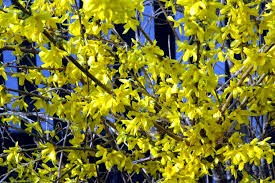

Forsythia contains oleanolic acid (a component that is both antibacterial and antiallergenic and used in many types of cosmetics and foot care products), sterols, phenols and flavonoids. Its traditional use in Chinese medicine is for inflammation, swollen lymph, carbuncles (staph abscesses that go deeper into the tissues and get larger than boils), fevers, respiratory infections, acute endometriosis, measles, tonsillitis, meningitis, encephalitis B, earaches, parotitis (inflammation of one or both parotid glands on either side of the face-salivary glands), skin diseases and as a cardiovascular tonic. In a small Korean study, forsythia was also found to lower cholesterol. In China, this herb is known as 'Lian Qiao'.
The forsythia most often used for medicinal purposes is Forsythia Suspensa. The fruit is gathered, steamed, then dried for use. It is most used as a tea or capsule but can be powdered and sprinkled on applesauce for children. It also can be tinctured. There are no drug interactions and no known side effects of forsythia. However, it is said that pregnant or nursing mothers shouldn't use it just to be safe. (Don't get me started on the whole allopathic thing...)
As a side note, if you have seen the movie 'Contagion' you will remember that forsythia was mentioned as being used to treat the mysterious illness people were dying of in the film. Very interesting...
As is customary with my posts I am including some links below for your benefit. Use them as you see fit and stay healthy, happy and strong.
http://www.amazon.com/Planetary-Herbals-Classic-Tablets-tablets/dp/B000GFSV46/ref=sr_1_3?ie=UTF8&qid=1397099743&sr=8-3&keywords=forsythia
http://www.amazon.com/Lynwood-Forsythia-pot-intermedia/dp/B00IJGVFWY/ref=sr_1_8?ie=UTF8&qid=1397099743&sr=8-8&keywords=forsythia
http://www.amazon.com/HONEYSUCKLE-FORSYTHIA-TEA-FOR-COLD/dp/B005SJI79Y/ref=sr_1_11?ie=UTF8&qid=1397099743&sr=8-11&keywords=forsythia
http://www.amazon.com/Qiao-MW5374c-concentrated-Extract-forsythia-Suspensa/dp/B004YWL1J4/ref=sr_1_21?ie=UTF8&qid=1397099864&sr=8-21&keywords=forsythia
ROSEMARY-Rosemarinus Officinalis, Rosemarinus Prostratus
Also known as: garden rosemary, Moroccan rosemary, Spanish rosemary, rosemary provence, rosemary verbenone
Parts Used: leaves, flowers
Meridians/Organs affected: liver, stomach, spleen, pancreas, blood, nerves, gall bladder
Properties: stimulant, emmenogogue, antispasmodic, tonic, astringent, carminative, diaphoretic, aromatic, cephalic, nervine, antipyretic, anti-inflammatory, stomachic, anodyne, antiseptic, digestive, sudorific, rubefacient
Rosemary is a member of the Lamiaceae family and a native of the Mediterranean. It is a shrub-like plant that has dense, needle-like leaves and pale blue flowers that bloom at different times depending on their location and climate. It is a very aromatic plant that emits a pine like woodsy scent.
Rosemary has an interesting story that has followed it over the centuries. Typically, the rosemary grown in this country gets from between two to four feet tall. However, in the Mediterranean it can get up to six feet tall but will never be found taller than that. It is said that it takes rosemary 33 years to get to a height of six feet tall, which was believed to be the height of Christ (at least they believed this in Mediterranean countries ages ago) and that out of respect to Christ, the plant ceases to grow any taller than He was and will instead spread out at that point. It also was said that as Mary was fleeing Egypt with the Christ child she lost her cloak over a rosemary shrub and that the plant now has blue flowers because it absorbed the color from Mary's cloak.
Rosemary is steeped in a host of religious traditions-it was a symbol of fidelity and remembrance and as such was found at two of the most religious ceremonies in Christendom-marriage and death. Rosemary sprigs were often woven into bridal bouquets or exchanged by the couple at the time of their vows. The sprigs were also presented to the wedding guest as a reminder of virtue. On the opposite end of the spectrum, rosemary also was put upon the graves of the recently departed as a promise that they would not be forgotten.

Rosemary comes from the Latin term "marinus" meaning "dew of the sea" where it was most commonly found. It was one of the very first plants recorded to be used as medicine, as food, and in religious ceremonies. The rosemary flower is said to mean 'remembrance' and there may be something to that as it has been shown to improve memory. This has been known since ancient times as the Greeks would often wear a rosemary garland while studying. The Elizabethans would use rosemary to treat brain disorders, headaches and toothaches. Paracelsus (16th century German physician) used it as the main component in most of his natural remedies. He often used it for illnesses affecting the liver, heart, eyes and brain. The Arabs would use it to restore strength, speech and memory. During the 16th century it was used as an incense by the wealthy, who paid to have perfumers scent their homes with it.
Medieval herbalists used rosemary for all kinds of nervous conditions. They also believed it could restore one's youth and was used by many for just such purposes. This is where the famous 'Hungary water' came from. Elizabeth, the Queen of Hungary, was an older woman who suffered terribly with rheumatic joints. An aged monk (some records also say a hermit), wanting to help his Queen, told her to use the oil of rosemary in alcohol and rub it on her problem areas. She did as instructed and in a year's time she was free of her pain and so vibrant that she won the heart of a man several decades her junior. This herbal formula was supposedly passed down and was recorded in a 1732 edition of a book on herbal remedies. The original formula reads something like this: "Take a handful of foot long tips and chop them into inch-long slivers. Add them to a gallon of brandy. Add almost as much myrtle as rosemary, and let the concoction stand three days. Then distill it to an oily reduction."
Culpeper recommended using rosemary as incense 'to expel the contagion of pestilence.' Decoctions of rosemary tea and rosemary wine were said to cure joint stiffness when applied topically. The tea is also said to help alleviate headaches and restlessness when taken before bed. The infusion was also used as a mouthwash when rosemary was combined with mint and anise.
Theophrastus and Dioscorides used it as a remedy for liver and stomach issues and Hippocrates would use it for disorders of the spleen and liver. Galen also used it for liver disorders, particularly jaundice. European physicians used rosemary oil for arthritis, depression, headaches, coughs, colds, diabetes, memory loss, muscle spasms, migraines and the flu. The British have used it to lower blood cholesterol and strengthen the cardiovascular system. They have also used it for gall bladder problems, hepatitis, colitis, colic, indigestion, asthma, bronchitis, whooping cough, sinusitis, and excess mucus buildup in the body. Both the herb and the oil are highly antiseptic, diuretic, stimulant and cholagogue. It has been found to help with weakness and fatigue, sore muscle, shingles, abscesses and boils, backaches, edema, etc. Surprisingly, what rosemary is most well-known for aside from its culinary aspects is its effectiveness as a hair and scalp treatment. It is tonic and conditioning to the hair and scalp, especially dark hair; and rosemary is said to help retain the color as well. Adding a little oil to shampoos can not only condition the hair but help with dandruff and hair loss.
Rosemary stimulates cell renewal. It can help to heal wounds, burns dry skin, aged skin, acne, broken capillaries, varicose veins, and diminish cellulite. It helps to tighten and tone tissues, strengthen the central nervous system, balance emotions and control mood swings. This is a plant that has so many benefits it rightfully deserves a spot in the herbal first aid kit as well as the culinary shelf.
CAUTION: As a word of caution, rosemary has been shown to elevate the blood pressure; if you suffer from hypertension it is best not to use this herb on a regular basis. It can also be irritating to sensitive skin and the oil has been known to trigger epileptic seizures in a few individuals. PREGNANT WOMEN SHOULD NOT USE THIS HERB ON A REGULAR BASIS AS IT STIMULATES THE UTERUS.
As is customary with my posts I am including some links below for your benefit. Please use them as you deem necessary.
http://www.amazon.com/Starwest-Botanicals-Organic-Rosemary-Whole/dp/B001A1VII6/ref=sr_1_1?ie=UTF8&qid=1397097836&sr=8-1&keywords=rosemary
http://www.amazon.com/Organic-Rosemary-Essential-Undiluted-Therapeutic/dp/B0062CTOY8/ref=sr_1_2?ie=UTF8&qid=1397097836&sr=8-2&keywords=rosemary
http://www.amazon.com/Rosemary-Seeds-MUST-HAVE-herb/dp/B000SQMZ54/ref=sr_1_4?ie=UTF8&qid=1397097836&sr=8-4&keywords=rosemary
http://www.amazon.com/Simply-Organic-Certified-1-23-Ounce-Container/dp/B000WR2OFK/ref=sr_1_7?ie=UTF8&qid=1397097836&sr=8-7&keywords=rosemary
http://www.amazon.com/Weleda-Rosemary-Hair-Oil-Ounce/dp/B000YTGT6Q/ref=sr_1_20?ie=UTF8&qid=1397098065&sr=8-20&keywords=rosemary
http://www.amazon.com/Rosemary-Plant-Great-Gift-Indoors/dp/B000PAV2BG/ref=sr_1_22?ie=UTF8&qid=1397098084&sr=8-22&keywords=rosemary
http://www.amazon.com/Natures-Way-Rosemary-Leaves-Caps/dp/B0001VWCW2/ref=sr_1_23?ie=UTF8&qid=1397098084&sr=8-23&keywords=rosemary
http://www.amazon.com/Aura-Cacia-Essential-Rosemarinus-Officinalis/dp/B0002JGV6G/ref=sr_1_25?ie=UTF8&qid=1397098084&sr=8-25&keywords=rosemary
Cayenne-Capsicum Fastigiatum, Capsicum Frutescens, Capsicum Annum
Also known as: Guinea pepper, African Bird pepper, chilies, Spanish pepper, Capsicum, Red pepper, Cockspur pepper
Parts used: fruit (the pepper)
Meridians/Organs affected: kidneys, lungs, spleen, stomach, heart, circulatory
Properties: stimulant, expectorant, astringent, hemostatic, carminative, antispasmodic, anti-inflammatory, antibacterial, tonic, sialagogue, alterative, rubefacient, diaphoretic, emetic
Cayenne is a member of the Solanacea family also known as the Nightshade family. It has a branched stem with lance-like leaves and bell-shaped green or white flowers that bloom during the spring and summer. Once it flowers the elongated peppers start to appear and when ripe turn a bright shiny red but can also be green, orange or yellow.
Cayenne has a lengthy history. It is native to Europe but was introduced to India and Africa early on. It was introduced to England in 1548 from India and by 1650 it was grown all over northern Europe. According to history, Christopher Columbus came across chile peppers in the West Indies during his travels. Thinking it was a kind of black pepper he brought back some seeds and found it wasn't black pepper after all. Chile peppers have also been found in Mexico in some of the earliest excavations, making it a culinary staple for that country for several centuries.
Cayenne was used to relieve flatulence, increase internal blood flow and sweating and to prevent or treat nausea. It was used as a digestive aid and to stop bleeding ulcers. The South Americans learned early on of its anti-inflammatory capabilities and used it for arthritis, rheumatism, neuralgia, muscle aches and pains, asthma, bronchitis, and to assist in clearing excess mucus from the system.
Jethro Kloss (author of Back to Eden) used it for practically everything under the sun. He said it worked especially well for lockjaw when combined with lobelia and that it is one of the best known stimulants for man. Dr. John Christopher also said as much. Kloss had his own liniment that was used on scalds, burns, wounds, sprains, etc.
From the 'Standard Guide to Non-Poisonous Herbal Medicine' we read, "...it (cayenne) grows abundantly in the West Indies, where the negroes count it almost a certain remedy for nearly all their maladies. They have no fears of fatal effects from fevers, even the terrible and devastating yellow fever, if they can get plenty of capsicum." It goes on to say that, "...when the stomach is foul, a strong dose of the powder will excite vomiting and an enema of it and lobelia and slippery elm will relieve the most obstinate constipation."
R. Swinburne Clymer, author of 'Medicine of Nature' says, "Capsicum is the most pronounced, natural, ideal stimulant in the entire material medica. It cannot be equaled by any known agent when a powerful and prolonged stimulant is needed, as in congestive chills, heart failure, and other conditions calling for quick action. The entire circulation is affected by this agent and there is no reaction. In this it stands alone as ideal."
The African Bird pepper variety is considered to be the purest and best stimulant of this species. Cayenne has the ability to bring elasticity back to the cells, arteries, veins and capillaries, assisting with high blood pressure, digestive issues, cardiac problems including heart attacks, intestinal ulcers, etc.
Dr. Christopher tells a story about when he used to travel with a younger gentleman on business. This young man was impressed with how Dr. Christopher could keep up with him and not be fatigued by all the traveling. Each morning while traveling, Dr. Christopher would take wheat germ oil with cayenne. One day the young man asked Dr. Christopher what he was taking and he explained what it was and how it worked. The young man asked if it would help with his chronic high blood pressure and hemorrhoids. Dr. Christopher told him if he took it faithfully every day it would, IF he was brave enough to follow through with it. The man started taking it and within a year both of his problems had cleared up entirely and his doctors were stumped as to how it happened.
Cayenne mixed with plantain and used as a poultice is said to draw out any object embedded in the skin.
Cayenne is a nutritive herb. It is a good source of iron, B Complex vitamins, phosphorus and calcium. It also contains more vitamin C than oranges. It is a catalyst to most herbal formulas and enhances how the other herbs are used by the body.
Cayenne is safe for everyone-including infants-but as with all things use it in very small amounts. It is best taken as an infusion, tincture, or capsule or used in a salve. Never decoct cayenne as it destroys the medicinal components of the herb.
As is customary with my posts I am including some links below for your benefit. Use them as you see fit. Stay strong and healthy!
http://www.amazon.com/Starwest-Botanicals-Organic-Cayenne-1-pound/dp/B003AYEHOI/ref=sr_1_1?ie=UTF8&qid=1390514195&sr=8-1&keywords=cayenne+pepper
http://www.amazon.com/Simply-Organic-Certified-2-89-Ounce-Container/dp/B0019I2FP0/ref=sr_1_2?ie=UTF8&qid=1390514292&sr=8-2&keywords=cayenne+pepper
http://www.amazon.com/Natures-Way-Cayenne-Pepper-Caps/dp/B0006ZIT2A/ref=sr_1_6?ie=UTF8&qid=1390514292&sr=8-6&keywords=cayenne+pepper
http://www.amazon.com/Cayenne-Pepper-Miracle-Healers-Kitchen-ebook/dp/B0082PXMVY/ref=sr_1_16?ie=UTF8&qid=1390514292&sr=8-16&keywords=cayenne+pepper


