Thursday, December 19, 2013
PARSLEY
Parsley-Petroselinum Sativum
Also known as: garden parsley, rock parsley, common parsley, march
Parts used: leaves, roots, seeds
Meridians/Organs affected: lung, stomach, bladder, liver
Properties: diuretic, carminative, aperient, expectorant, emmenogogue (the seeds), sedative, anti-rheumatic, antiseptic, antispasmodic, anthelmintic, stimulant
Parsley is one of those herbs often passed over for some that are far more pungent or aromatic. Usually found on a plate next to a steak or a piece of fish and often left behind after the other has been consumed. This is not an herb to just look at or decorate a plate, it has much to offer.
Native to Sardinia, Turkey, Lebanon and Algeria it is now grown all over the world. It is a bright green hairless plant that grows in moist, well drained soils in full sun and usually in temperate climates. It is poisonous to most birds but other animals seem to do exceedingly well with the plant, especially rabbits who love it. It is a biennial but most people grow it as an annual. In the first year it develops a host of green leaves with long stems. It will have developed white roots of varying thicknesses. The second year it has greenish yellow flowers that develop on umbels or clusters. The seeds are grayish brown and are best gathered after the second years flowers have gone. The leaves can be gathered the first year and thereafter during the summer months. The root is best gathered after the leaves have died back in the fall.
Pliny spoke often of this plant and considered it one of the most important medicinal herbs of his time. The Greeks had many stories in which parsley was included. They believed that Hercules wore parsley as his garland and so it was woven into the garlands of winning athletes. Greek warriors would often feed their horses parsley before races or battle believing it would give them more speed and they would put wreaths of parsley all over when having banquets to absorb the fumes of alcohol and to prevent the men from becoming too inebriated. They would also use it to absorb the odor of garlic, onions and other more pungent herbs. On the other hand, they also believed that a person who was dying was 'in need of parsley' as it was believed that parsley sprung up on the graves of fallen heroes.
The Romans used parsley to freshen breath and to aid with digestion. The bodies of the dead in both Greek and Roman cultures were often sprinkled with parsley to deodorize the decaying corpse. In medieval times it was used to help with anything from kidneys or liver complaints to bronchial disorders. The German herbalist, Hildegard of Bingen, used compresses of parsley for arthritis and used a boiled parsley wine concoction for heart and chest pains. Nicholas Culpeper, a seventeenth century English herbalist, recommended it for regulating menstruation, dissolving kidney stones and to help expel gas from the system. By the late 1800's parsley was recognized by the US as a diuretic, a laxative and as an alternative to quinine in the treatment of malaria. Gerard said that parsley was just the thing to, 'take away stoppings and provoke urine....to waste away winde, and are good for such as have dropsie, to draw down the menses, bring away the after birth; they be recommended also against the cough....and are also good to be put into clysters against the stone or torments of the guts.'
Parsley is high in vitamin C, containing more per volume than oranges. It is also a good source of iron, chlorophyll, boron, fluorine, potassium, phosphorus, calcium, vitamin A, thiamine, riboflavin and niacin. It is considered a nutritive plant as well as a medicinal one.
Parsley seed tea is still widely used in Germany today to help in the treatment of hypertension due to its diuretic actions. A study on parsley in the Journal of Allergy and Clinical Immunology showed that this often overlooked herb actually inhibits the secretion of histamine (the chemical that triggers allergies or allergic reactions in people). This may be beneficial to those who suffer with allergies, hay fever, asthma and a host of other issues. Parsley also contains a chemical known as psoralen. This chemical has recently come under the spotlight as a possible treatment for one form of cancer known as cutaneous T-cell lymphoma. In recent research it has been found to have the ability to prevent and kill certain types of cancer cells from reproducing. It has amazing immuno-stimulant capabilities. As such it should make this herb a popular one for such things as HIV, AIDS, hypothyroidism, goiter, rheumatism and a host of other complaints. The leaves and root are particularly beneficial for urinary tract infections where it seems to work much like an antibiotic. The root itself has been used for centuries to dissolve and expel stones and gravel as well as parasites and worms. All parts of this plant have been shown beneficial against bronchial and lung congestion as well as digestive issues (such as gas and indigestion).
Parsley oil (made from the root, leaves and seeds) has been used throughout the centuries for many maladies such as cystitis, dysmenorrhea, tonsillitis, rheumatism, broken capillaries, varicose veins, psoriasis, sore breasts, bruises, etc. It is a powerful oil and not to be used by pregnant women (parsley in general should not be used by pregnant women as it stimulate the uterus) or those with kidney disease (although Dr. Christopher would say otherwise). The oil has also been found to regenerate liver tissue in rats, so apparently it is also a cell proliferant. Not bad for an overlooked garden herb.
Dr. Christopher said that if used properly that parsley would remove gall stones and that it is, "a specific for the adrenal glands, is powerfully therapeutic for the optic nerves, the brain nerves and the whole sympathetic nervous system....it is a remarkable remedy for expelling watery poisons, excess mucus, flatulence, for reducing swollen and enlarged glands, etc." It can also be substituted for celery in many recipes and it goes well with practically everything from soups, salads, fish, meats, vegetables and more.
As is customary with my posts I am including some links below for your perusal. Use them as you deem necessary. Happy and healthy living!
http://www.amazon.com/Simply-Organic-Parsley-Certified-Container/dp/B000WS1DT2/ref=sr_1_1?ie=UTF8&qid=1387494987&sr=8-1&keywords=parsley
http://www.amazon.com/Natures-Way-Parsley-Capsules-100-Count/dp/B00016AHR4/ref=sr_1_2?ie=UTF8&qid=1387498137&sr=8-2&keywords=parsley
http://www.amazon.com/Nutramedix-NutraMedix-Parsley-Detox-30/dp/B001EXRG3G/ref=sr_1_7?ie=UTF8&qid=1387498137&sr=8-7&keywords=parsley
http://www.amazon.com/Parsley-Italian-Certified-Organic-Seeds/dp/B0012YEK7M/ref=sr_1_9?ie=UTF8&qid=1387498137&sr=8-9&keywords=parsley
http://www.amazon.com/Alvita-Bags-Parsley-Caffeine-1-625/dp/B001GCTTR6/ref=sr_1_11?ie=UTF8&qid=1387498137&sr=8-11&keywords=parsley
http://www.amazon.com/Frontier-Parsley-Flakes-Certified-Organic/dp/B001VNP7L2/ref=sr_1_3?ie=UTF8&qid=1387498137&sr=8-3&keywords=parsley
PEPPERMINT
Peppermint-Mentha Piperita
Also known as: Mint, Brandy mint, Balm mint, Lamb mint, Curled mint
Parts used: leaves, flowers, oil
Meridians/Organs affected: digestive, respiratory
Properties: stimulant, general tonic, antispasmodic, digestive, carminative, cholagogue, hepatic, emmenogogue, febrifuge, antiseptic, expectorant, analgesic, anti-inflammatory, aromatic, antiviral, antifungal, anti-parasitic, antibacterial
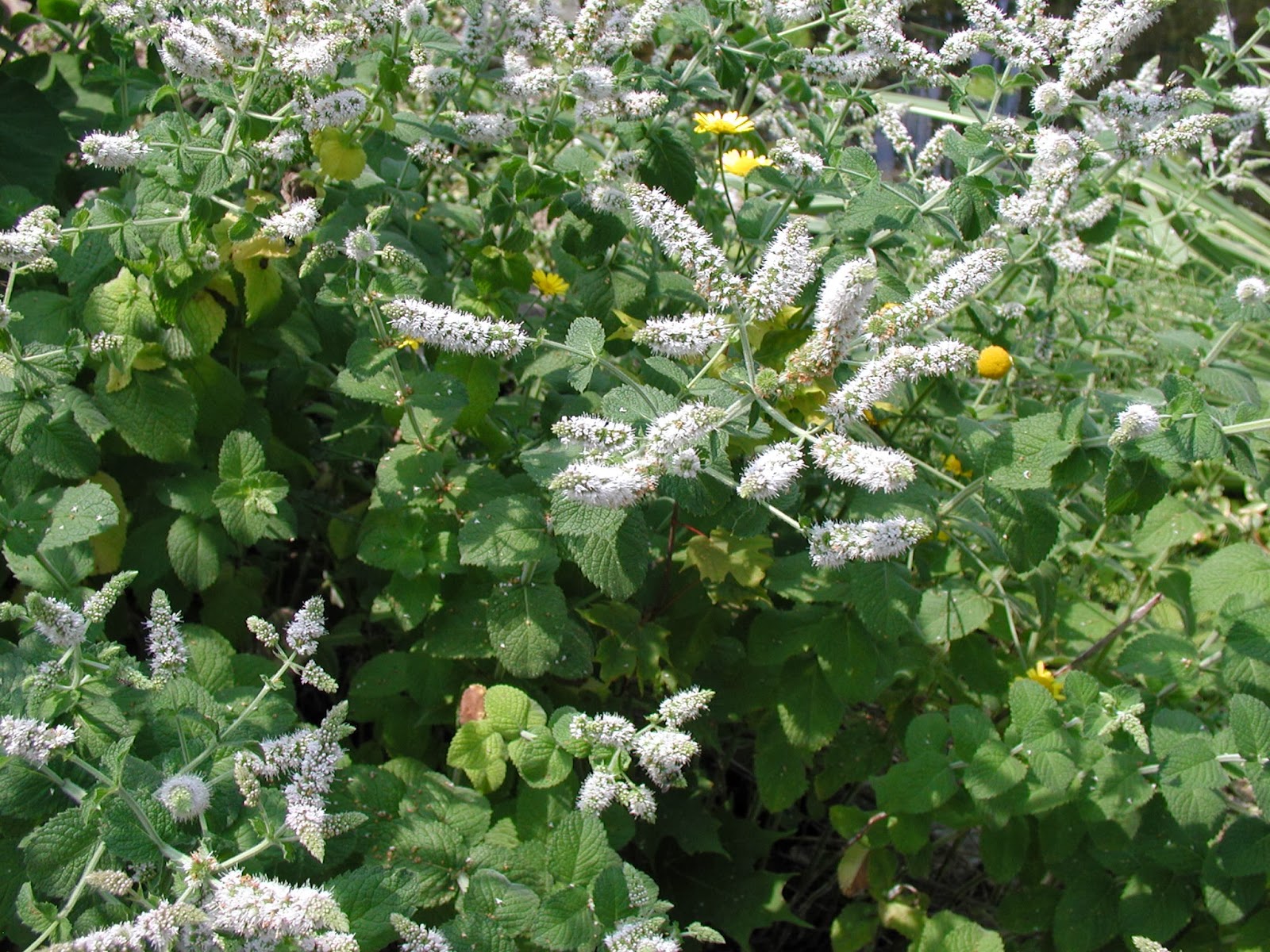
There are roughly 25 different species of mint. Peppermint is one of the official mints as is spearmint and wild mint. Mint does have a tendency to cross breed with others of its species and so new milder versions seem to pop up all over the place every year. Peppermint is a native of Europe but has been here in the usa for quite some time. It has square smooth stems that get up to 3 feet tall with sharply toothed leaves and white flowers that bloom from July to September. The main difference between peppermint and most other varieties is that peppermint blooms are on spikes whereas most other mints bloom in whorls where the leaves axil. It can be found growing in moist soil, along streams, near wooded areas, etc. As it does spread rather tenaciously, it is best to grow it with other plants that tend to keep it tethered back such as Chinese rhubarb or hostas. The leaves and stems are best gathered before the plant blooms between 11 a.m. and noon from April to June. The flowers can be gathered between August and September from 11 a.m. to noon.
Peppermint belongs to the Labiatae or Mint family. The true mints will have 'Mentha' in their Latin names. Mintho and 'mentha' was part of Greek mythology. She was a beautiful nymph that Pluto, god of the underworld, fell in love with. The story goes that Persephone, Pluto's first interest and abductee whom he had taken at one point to rule over his dominion, became jealous of this new love interest he had and she changed Mentha into a plant which is now known as 'mint'.
This plant has been used for centuries as a culinary and a medicinal herb. Theophrastus spoke of it often and used it to great lengths as did many as an aromatic and to freshen the breath. It has been used in baths, sachets, potpourris as a it does freshen the air and does disinfect. Many churches and temples used it as a strewing herb so it would take care of odors many travelers would bring in with them. It was also used by many in cooking as it has a pleasant flavor and a cooling effect on the body. The leaves were often chewed raw or placed in salads, cooked in soups, stews and was used in sauces for meats, sweet dishes and in jellies, beverages, candies, syrups, gums, etc. Even the commercial world has picked up on its pleasant flavor and its more medicinal qualities as well. As such you will find it in mouthwashes, toothpastes, joint creams, soaps, commercial tea blends, etc.
Culpeper had mint listed for 40 different ailments. Gerard would mix it with a bit of salt for wasp stings and dog bites. Pliny said that the smell of it speeds up the mind and the taste increases the appetite. Parkinson wrote that whether it is used externally or internally it strengthens the body and comforts the stomach. The active component of mint known as 'menthol' has been known to relieve spasms in the intestinal tract and to dispel or alleviate gas. It helps to calm the stomach, help with bile production and thus aids digestion, helps with fevers, coughs, colds, congestion, kidney issues and headaches. In many cultures (Greek, Egyptian, Roman, Chinese) to ease toothaches, tendonitis, diarrhea, bowel issues, colic, hysteria, rheumatism and arthritis. It has also been used to relieve morning sickness and motion sickness. Peppermint extracts and oil have also been shown to be useful against some strains of bacteria and viruses such as herpes simplex, influenza A, staph, candida, strep and pseudomonas acrginosa. The Ojibwa Indians also use it as a blood purifying herb.
While peppermint is a native of Europe, Asia and the Mediterranean, it has been cultivated in the united states since the late 1700's and the usa is the largest producer of mint today. It takes 1000 pounds of mint to produce 1 pound of oil.
Peppermint oil has enjoyed many uses over the centuries-proving it to be worthwhile to keep in the garden. It works primarily on the nervous system as it helps with fatigue and drowsiness. As it is also cooling and stimulating it works to relax tense muscles, ease cramps, reduce inflammation, sunburn and muscle aches and pains. The oil is not supposed to be ingested as it can cause heartburn and in large amounts can be fatal. However, the tea can be drunk freely and it can be used externally as a wash as often as is needed. The oil in the herb can also stimulate menstrual cycles so should be avoided by pregnant women.
As is customary with my posts I have included some links below for your perusal. May it help to expand your horizons and use mint in a new and unusual way!
http://www.amazon.com/NOW-Foods-Peppermint-Oil-ounce/dp/B00028MKRQ/ref=sr_1_2?ie=UTF8&qid=1387494093&sr=8-2&keywords=peppermint
http://www.amazon.com/Foods-Peppermint-Ginger-Fennel-Softgels/dp/B001F0R7QE/ref=sr_1_5?ie=UTF8&qid=1387494093&sr=8-5&keywords=peppermint
http://www.amazon.com/Davidsons-Tea-Organic-Peppermint-16-Ounce/dp/B000SAPXN6/ref=sr_1_10?ie=UTF8&qid=1387494093&sr=8-10&keywords=peppermint
http://www.amazon.com/Burts-Bees-Fabulously-Peppermint-Rosemary/dp/B001R2S8HM/ref=sr_1_16?ie=UTF8&qid=1387494093&sr=8-16&keywords=peppermint
http://www.amazon.com/Dr-Bronners-Magic-Soaps-Pure-Castile/dp/B00120VWJ0/ref=sr_1_11?ie=UTF8&qid=1387494093&sr=8-11&keywords=peppermint
http://www.amazon.com/Simply-Organic-Peppermint-Certified-Container/dp/B003UKC2UI/ref=sr_1_14?ie=UTF8&qid=1387494093&sr=8-14&keywords=peppermint
Tuesday, November 12, 2013
MARSHMALLOW
Marshmallow-Althaea Officinalis, Malva Rotundifolia, Malva Sylvestris, Malva Neglecta
Also known as: Althaea, sweet weed, wymote, mortification root, mallards, schloss tea, malva, mallow, cheese weed, button weed
Parts used: Root, leaves, flowers, peas
Meridians/Organs affected: respiratory, digestive, urinary
Properties: diuretic, demulcent, mucilaginous, emollient, tonic, vulnerary, alterative, lithotriptic, mild laxative
Marshmallow is a native of Europe and as with many herbs before it, it has made its way here to the usa. This plant has soft, toothed, downy leaves that can resemble a maple leaf depending on the variety. The flowers are pink or white with pink streaks through them and have 5 petals. It can get anywhere between 2-4 feet tall. It grows in damp meadows, marshes, by the ocean or rivers, ditches and basically anywhere the is considered moist. It blooms from July to September. The leaves are best gathered before the plant blooms however. The root is best gathered in the fall. Marshmallow is typically an annual but it can over winter and become a perennial in the proper climate.'
Marshmallow is well known across the globe by many cultures. It is mentioned in Chinese and Arab medicinal texts and in the Bible (in the book of Job where it is partaken of in times of famine). Theophrastus (370-287 BC) talks of mallow root being soaked in wine and used for coughs. The Romans and Chinese would eat it as a delicacy. It does contain a high mucilage content which helps to loosen phlegm and expel it from the respiratory system. It is also very beneficial for gastrointestinal issues for the same reason. As it is mucilaginous it soothes the body and has been used for diarrhea, dysentery, ulcers, whooping cough, sore throats, etc. Externally it works much the same way to soothe and heal wounds, bruises, burns and infections.
Marshmallow is a member of the Mallow family. There are over a thousand species in this family with two things in common. They all contain an abundance of mucilage and they are all edible.
In fact, other members of this family can be substituted for mallow as they have similar qualities (hibiscus and hollyhocks being examples). The Greek 'athos' means 'to cure' and it had quite a reputation as a cure all. King Charlemagne (742-814 AD) demanded that it be grown throughout his kingdom. It is rumored he suffered from ulcers and found it to be a wonderful remedy. Culpeper's son was diagnosed with what was termed a 'plague of the guts' and suffered something terrible. Culpeper gave mallow to his son (boiled it and served it with milk) and two days later his son was cured. It was used for many different ailments and seemed to work well for a host of diseases. It was used for diabetes, tuberculosis, septicemia, gangrene, vomiting, blood in the stool, nose or urine, kidney and gall stones, inflammations, stomach disorders, bedsores, etc. There are many documentations of it being used as a poultice for blood poisoning, burns, bruises, gangrene, sores, wounds, etc. (The root or leaves were lightly steamed and then applied warm and changed three times a day). The root was also commonly used in combination with parsley root, juniper berries or gravel root to assist with the pain and expellation of stones. Since it does contain a decent amount of calcium and magnesium it has also been found useful for arthritis. It seems to have the ability to bind to toxins in the body and eliminate them. The root was also used to increase the milk production in nursing mother's. While most people know nothing about this plant they are familiar however with the term 'marshmallow' in general. The white fluffy confection....and although the original marshmallow was made using this plant, it has not been done so for hundreds of years. The roots were boiled in water and then beaten like egg whites into a froth and used in pies, desserts, etc.
This herb is very nourishing and immune enhancing. It is often employed when the throat is so swollen nothing can be taken-as it seems to slide down without a problem, soothing the throat and taking care of inflammation as it goes. Water extracts of this plant are far more effective than an alcohol extract although a wine extract with this herb would be just fine. The root has been sliced and added to soups and stews. The small peas that resemble tiny cheese rounds are also edible and have been eaten alone, in salads, soups, stews, etc.
Dr. Christopher used marshmallow in a great many formulas for things, including the well known 'black salve'. He speaks of a man who had an infection in his leg that turned gangrenous. The man went to the doctor who recommended amputation. The man refused and instead went to Dr. Christopher who made a large decoction of marshmallow root for the man to immerse his entire leg in. In a matter of hours the leg had returned to normal. There are several stories like this one where marshmallow is concerned with miraculous results. Clearly it is an herb that should be kept in the garden for medicinal and nutritional benefits.
As is customary with my posts I have included some links below for your benefit. I hope they come in handy for you in your continued search for health and well being.
http://www.amazon.com/Starwest-Botanicals-Marshmallow-Root-Organic1-pound/dp/B003AYEHJI/ref=sr_1_3?ie=UTF8&qid=1384309730&sr=8-3&keywords=marshmallow+root
http://www.amazon.com/Natures-Way-Marshmallow-Root-Capsules/dp/B001E10JKU/ref=sr_1_2?ie=UTF8&qid=1384309852&sr=8-2&keywords=marshmallow+root
http://www.amazon.com/Marshmallow-Leaf-Root-Tea-Bags/dp/B000HB9TOU/ref=sr_1_5?ie=UTF8&qid=1384309852&sr=8-5&keywords=marshmallow+root
http://www.amazon.com/Botanic-Choice-Alcohol-Extract-Marshmallow/dp/B007N05RZS/ref=sr_1_6?ie=UTF8&qid=1384309852&sr=8-6&keywords=marshmallow+root
http://www.amazon.com/Marshmallow-Root-Powder-Organic-officinalis/dp/B002DXXE7S/ref=sr_1_14?ie=UTF8&qid=1384309852&sr=8-14&keywords=marshmallow+root
TANSY
Tansy-Tanacetum Vulgare
Also known as: bitter buttons, hindheal, bachelor buttons, scented fern, Johnson's remedy, cheese, wurmkraut, ginger plant, parlsey fern, stinking willie, alecost, costmary, bible leaf
Parts used: leaves, blossoms
Meridians/Organs effected: digestive, circulatory, reproductive, hepatic, respiratory
Properties: anthelmintic, tonic, emmenogogue, diaphoretic, stimulant, diuretic, nervine, vulnerary, aromatic, stomachic, antispasmodic, carminative
Tansy is a member of the Sunflower family. It is a stout perennial with deeply divided segmented leaves and bright yellow button like flowers that bloom from July to September. It can get up to 6 feet tall and is very aromatic. It grows along ditches, roadsides, pastures, public parks, vacant lots, meadows, dumps, etc. It does well in compact soil with a high pH level and full sun.
Tansy has been used for thousands of years-both as a culinary and a medicinal agent. There are recipes dating back to the 1400's for this herb. It was most commonly used during Easter for cakes, cookies, omelets and salad. The ancient Egyptians used it as part of their embalming process which was carried on to other cultures. It was also packed in coffins to repel insects and delay putrefaction before funerals. It was scattered on floors to repel insects and to freshen the air after feasting. It was also used under mattresses, between blankets and clothing and around food to kill or repel insects there. It has been used in dried floral arrangements and can still be found used that way today. They would also make a strong tea from tansy and use it in the garden to kill insects and as a headwash for lice or scabies. The tea was also used for rheumatism, indigestion, menstrual difficulties, nerve pain, lack of appetite, gout, migraines, jaundice and hysteria. The oil of the plant is high in thujone and in the past has caused miscarriages or been used for abortions. As such this plant has been banned by the FDA. It should not be used by pregnant women for this reason as it stimulates the uterus.
The seed of the plant was used to expel worms, treat gout and for bladder complaints as well as to help with insomnia and nervousness. It has also been used in cosmetics for skin maladies.
Tansy is a native of Europe. It was brought to the usa and cultivated here by John Winthrop's Plymouth colony in 1631. Its Greek name 'Athanasia' means 'immortal'. Probably one of the reasons they used it for embalming. It was also used to preserve meat (was rubbed on the meat) to keep the flies away. By the 17th century it became one of the bitter herbs partaken of at Passover. The tea from the leaves was commonly used in Europe for flatulence, sore throat, dyspepsia, jaundice and inflammation. Some studies have shown that it can help to relieve intestinal discomfort, reduce blood lipid levels, kill bacteria and fungi, fight intestinal worms, combat tumors, stimulate bile, influence blood sugar levels and enhance one's resistance to encephalitis. Most modern establishments consider it to be a poison and won't use it. I say 'More for Me!'
Jethro Kloss (author of Back to Eden) said tansy is one of the best herbs to promote menstrual flow. It helps to tone the system, strengthen weak veins and soothe the bowels. He used hot fomentations of tansy tea for tumors, bruises, sciatica, freckles, sunburn, leucorrhea, inflamed eyes, toothaches and inflammations. The early colonists would also gather the flowers and leaves to make yellow dyes for their wool.
Tansy was once also used to make an ointment for bruises, burns due to gunpowder blasts and for parasite infestations. It is best gathered between July and August between 11 a.m. and 4 p.m. when it is in full bloom.
As is customary with my posts I am including some links herein for your own benefit. Use them as you deem necessary. Happy healthy living!
http://www.amazon.com/Outsidepride-Tansy-Herb-5000-Seeds/dp/B00AVLWRCM/ref=sr_1_1?ie=UTF8&qid=1384296368&sr=8-1&keywords=tansy
http://www.amazon.com/Organic-Tansy-Tincture-Ounce-Bottle/dp/B007O49TWK/ref=sr_1_6?ie=UTF8&qid=1384296437&sr=8-6&keywords=tansy
http://www.amazon.com/Blue-Tansy-Therapeutic-Natures-Kiss/dp/B00746RA38/ref=sr_1_7?ie=UTF8&qid=1384296437&sr=8-7&keywords=tansy
http://www.amazon.com/Flower-Essence-Tansy---/dp/B0025OWO4Y/ref=sr_1_9?ie=UTF8&qid=1384296437&sr=8-9&keywords=tansy
http://www.amazon.com/Herbal-Gardens-South-Florida-Inc/dp/B000LPJ6IG/ref=sr_1_20?ie=UTF8&qid=1384296662&sr=8-20&keywords=tansy
Monday, October 28, 2013
FIR
FIR-Abies Balsamea, Abies Bifolia, Abies Grandin, Abies Concolor, Abies Lasiocarpa
Also known as: subalpine fir, white fir, grand fir, red fir
Parts used: inner and outer bark, needles, branches, pitch
Meridians/Organs affected: respiratory, urinary
Properties: antiseptic, expectorant, vulnerary
Fir is an evergreen tree, like so many others. It is a coniferous tree with thin, smooth bark that bulges with pockets of resin. The branches are thin and whorled and the needles are flattened and twist upwards. The cones are upright and cylindrical appearing from May to July. The subalpine fir has rounded tips on its branches and grows on the alpine slopes from the southern Yukon in Alaska to New Mexico. The white fir has pointed needles with white lines on both sides and it grows from southern Idaho and Wyoming to New Mexico. The grand fir has notched blunt needles with white lines on the under surface only. It grows from southeastern BC to Idaho and Wyoming.
As is customary with my posts I am including some links below that you might find useful. Happy and healthy living!
http://www.amazon.com/NOW-Foods-Balsam-Fir-Needle/dp/B0014UEG50/ref=sr_1_5?ie=UTF8&qid=1383009156&sr=8-5&keywords=fir+needle
http://www.amazon.com/Thymes-Frasier-Aromatic-Candle-Needle/dp/B00EJ9N5RS/ref=sr_1_3?ie=UTF8&qid=1383009218&sr=8-3&keywords=fir+needle
http://www.amazon.com/Seeds-Things-Balsam-Balsamea-Christmas/dp/B00AJ09ZK2/ref=sr_1_10?ie=UTF8&qid=1383009218&sr=8-10&keywords=fir+needle
http://www.amazon.com/Essential-Patchouli-Frankincense-Meditation-Cedarwood/dp/B002RXIIHU/ref=sr_1_14?ie=UTF8&qid=1383009218&sr=8-14&keywords=fir+needle
Also known as: subalpine fir, white fir, grand fir, red fir
Parts used: inner and outer bark, needles, branches, pitch
Meridians/Organs affected: respiratory, urinary
Properties: antiseptic, expectorant, vulnerary
Fir is an evergreen tree, like so many others. It is a coniferous tree with thin, smooth bark that bulges with pockets of resin. The branches are thin and whorled and the needles are flattened and twist upwards. The cones are upright and cylindrical appearing from May to July. The subalpine fir has rounded tips on its branches and grows on the alpine slopes from the southern Yukon in Alaska to New Mexico. The white fir has pointed needles with white lines on both sides and it grows from southern Idaho and Wyoming to New Mexico. The grand fir has notched blunt needles with white lines on the under surface only. It grows from southeastern BC to Idaho and Wyoming.
The fir tree has a resin called fir balsam that the native americans used for religious and medicinal purposes. The needles tea was mixed with deer grease and used as a hair treatment. It was also used for colds. The needles were dried and powdered and used like baby powder or rubbed on the body as perfume and as insect repellent. It was also used in this manner to sprinkle on runny open sores and mixed with tallow to use on wounds, cuts, bleeding gums, ulcers, and skin infections. They were also used in poultices for chest colds and fevers. The needles were also burned as incense and hung on walls to freshen the air. The smoke from the burning needles was inhaled for fainting, venereal diseases and headaches. The needles are also high in vitamin C and a good source of nutrition. They are diuretic and help to expel phlegm from the lungs. White fir branches were used to make tea for malaria and to stimulate urination. The burning of the wood was thought to bring protection and to stimulate confidence in those who were afraid of thunderstorms. The smoke was also used to cure sick horses. The cones were ground up into a powder and mixed with marrow and eaten as a delicacy. The inner bark was ground and was also mixed with flour to extend food supplies during shortages (this wasn't considered too tasty..just necessary). The cones were said to help with digestion. The pitch was used alone or in tea for colds, tuberculosis, asthma and coughs. In larger amounts it would cause vomiting. It was also used as an antiseptic for bruises and sores, cuts and wounds. The resin was chewed for bad breath. The resin can also cause skin reactions in some people though so use it with caution. The bark should be gathered in the early spring as should the sap. As is customary with my posts I am including some links below that you might find useful. Happy and healthy living!
http://www.amazon.com/NOW-Foods-Balsam-Fir-Needle/dp/B0014UEG50/ref=sr_1_5?ie=UTF8&qid=1383009156&sr=8-5&keywords=fir+needle
http://www.amazon.com/Thymes-Frasier-Aromatic-Candle-Needle/dp/B00EJ9N5RS/ref=sr_1_3?ie=UTF8&qid=1383009218&sr=8-3&keywords=fir+needle
http://www.amazon.com/Seeds-Things-Balsam-Balsamea-Christmas/dp/B00AJ09ZK2/ref=sr_1_10?ie=UTF8&qid=1383009218&sr=8-10&keywords=fir+needle
http://www.amazon.com/Essential-Patchouli-Frankincense-Meditation-Cedarwood/dp/B002RXIIHU/ref=sr_1_14?ie=UTF8&qid=1383009218&sr=8-14&keywords=fir+needle
Tuesday, October 8, 2013
CEDAR
Cedar-Thuja Plicata, Cedrus Atlantica, Cedrus Libani, Cedrus Brevifolia, Cedrus Deodorata, Juniperus Virginiana, Juniperus Mexicana
Also known as: Cedrium, cedarwood, cedar, cedrus
Parts Used: Bark, berries, sprays/needles
Meridians/Organs Affected: urinary, pulmonary, skin, hair, kidneys
Properties: antiseptic, antifungal, stimulant, tonic, insecticide, aromatic, expectorant, diuretic, anodyne, aphrodisiac, anti-anxiety, emmenogogue, anti-inflammatory, digestive, antibacterial, astringent
There are several different varieties of cedar and also several different opinions as to which one is the best to use for medicinal purposes. There are a few varieties of cedar here in the states. One is more commonly called red cedar or Juniperus Virginiana. It can get up to 100 feet tall and is found primarily east of the Rocky Mountains. The oil is obtained from the cones and the heartwood of the tree through distillation. It has a balsamic scent and looks yellow or orange when distilled.
Juniperus Mexicana also known as Texas cedarwood gets about 21 feet tall and can be found in Mexico, Central America and the southwestern united states. It has a dark orange to brown oil that is made from the needles and branches of the tree. It has a sweet woodsy scent.
The Atlas cedar grows in North Africa on top of the Atlas Mountains. It can also reach 100 feet in height. The oil is obtained from the steam distillation of the sawdust and wood chips. The oil is a nice yellow honey color and has a soft woodsy pine-like scent.
There are actually 4 true species of cedar. They are coniferous, evergreen trees that are known for their hardiness and long life. The 'true' cedars are the Atlas cedars which are native to the Atlas mountains of Morocco, the Cyprus cedars, the cedars of Lebanon found in Syria and SE Turkey and the Deodorata cedar in the western Himalayas. The needles of true cedars are bunched and yellow male flowers appear in the summer followed in the fall by the females after the pollen is gone. The cones take 2 years to come to maturation and then die off as the seed is released.
There is a grove of cedars in Lebanon that have been there since King Solomon's time. The first cedar planted in Britain was done in 1646 and is still there today. There is also a forest of cedars in Provence, France that have been there since 1862.
Cedars are the most often mentioned tree in the Bible, symbolizing abundance and fertility. The Egyptians used it as part of their embalming process and as part of 'mithridat' which was an antidote for poisoning for centuries. Dioscoredes and Galen referred to it as 'cedrium' and often used the resin to keep the body from putrefaction. Nicholas Lemery alsso used it for that but also would use it as an antiseptic for pulmonary and urinary issues. In 1925, Dr's. Gilbert and Michel used it for chronic bronchitis with great results. It has been used for eczema, dermatitis, alopecia, dandruff and as a sexual stimulant.
Cedar wood, cedar shavings and cedar oils have been used for eons as a moth repellant and in potpourri. They have also used cedar planks for smoking meats. It is one of the oldest components that was originally used as a perfume. Noah is supposed to have used it as incense to show his gratitude after the flood. The Tibetans also use it for incense in their temples as well as using it medicinally.
The Egyptians also used it to build their sarcophages-many of which are over 3000 years old and still in pristine condition. They also used it to build furniture and ships, in cosmetics, incense, perfumes and to repel insects. The papyri was also covered in cedarwood oil to preserve it. For thousands of years cedar has also been used to line closets, drawers and shelves and to protect clothes and belongings from insects and moths.
The native americans used cedar for skin rashes, rheumatism, respiratory problems, kidney infections, arthritis, gonorrhea, menstrual difficulties and tuberculosis. It is an expectorant so has been used for coughs, mucous build up and sinus congestion. Cedarwood oil promotes urination as well so helps with prostate problems and urinary tract infections, cystitis and urethritis. As it is also an antifungal it may be beneficial for candida. Cedarwood is also good to help with problems involving nervousness or anxiety. It can ease fear, stress, help to stabilize energy levels, diffuse anger and aggression, stimulate hair growth on the scalp, help fight dandruff and excessive sweating.
The Moroccan cedarwood oil is considered the best to use for medicinal purposes, but all cedars are medicinal. It is not recommended for internal use (the oil) as it can cause nausea, burning sensations and thirst. Also many cedars are adulterated with other oils so perhaps that is one reason the Moroccan variety is deemed the best to use as it has remained a true cedar oil.
A tea made from the boughs has been used for sore throats, colds, diarrhea and coughs. The tea from the bark has been used for kidney complaints. Tinctures of cedar are used for ringworm, athlete's foot, nail fungus and jock itch. The red cedar tincture and tea have been used to help with sluggish respiratory, reproductive, urinary and digestive tracts. Chewing the green buds was often done to relieve toothaches. The steam has been used to induce labor in pregnant women and the oil from the needles has been used for hemorrhoids, warts, herpes simplex and fungal infections.
The bark is rather pliable and has been used by the native americans to make baskets, ropes, mats, blankets and clothing. The bark was pounded until it became fluffy and was used in mattresses, diapers and as sanitary pads. The wood was used to make bowls, cradle boards, canoes, masks, siding and roofing.
Cedar should not be used by pregnant women as it stimulates menstrual flow. The western red cedar grows in rich, moist soil in BC, Alberta, Montana and Idaho. It takes 29 pounds of cedar to produce 1 pound of oil.
As is customary for my posts, I am including links below for you perusal. May you use them as you deem necessary. Be healthy and be happy!
http://www.amazon.com/NOW-Foods-Cedarwood-Oil-Ounce/dp/B000MGWIMK/ref=sr_1_5?ie=UTF8&qid=1381278036&sr=8-5&keywords=cedar+wood
http://www.amazon.com/Cedar-B222-Aromatic-Hang-ups-18-Piece/dp/B003VWDOCK/ref=sr_1_1?ie=UTF8&qid=1381278036&sr=8-1&keywords=cedar+wood
http://www.amazon.com/CedarFresh-Cedar-Balls-Lavender-24-Count/dp/B000BQYB30/ref=sr_1_4?ie=UTF8&qid=1381278036&sr=8-4&keywords=cedar+wood
http://www.amazon.com/Elizabeth-Karmels-Organic-Personal-Grilling/dp/B001W6Q55A/ref=sr_1_6?ie=UTF8&qid=1381278036&sr=8-6&keywords=cedar+wood
http://www.amazon.com/Giles-Kendall-OIL-12-8-Cedar/dp/B002RXHME0/ref=sr_1_10?ie=UTF8&qid=1381278036&sr=8-10&keywords=cedar+wood
http://www.amazon.com/Cedar-Sachet-pack-Natural-4-25/dp/B0026O44O6/ref=sr_1_13?ie=UTF8&qid=1381278036&sr=8-13&keywords=cedar+wood
Monday, October 7, 2013
TEASEL
Teasel-Dipsacus Fullonum, Dipsacus Sylvestris
Also known as: card weed, gypsy's comb, barber's brush
Parts Used: root, flowers (as an essence)
Meridians/Organs affected: kidney, liver, musculoskeletal, immune system, circulatory
Properties: tonic, diuretic, sudorific, stomachic, ophthalmic, antibiotic
Teasel is a biennial that can get up to 10 feet tall given the proper growing conditions. It has prickly rigid stalks, pale purple flowers (depending on the variety) on their cone shaped heads and large, prickly basal leaves.
Teasel has long been used by the Chinese for its medicinal benefits, something that this country is still struggling to realize. Since ancient times teasel water (collected by the cups that surround the stem of the cone) has been referred to as the 'bath of Venus'. It was used as an eyewash and a beauty wash for the skin, especially good for warts. The flowering tops are tipped over into a bowl of water to impart their 'essence' so that the plant itself is not destroyed.
Teasel has some interesting history. There are about 15 different species of teasel, one of which is called Fuller's teasel. This was used to tease the nap on wool to clean the cloth without ripping or breaking it-something the new metal cars are known to do when they meet a snag. In fact, some dedicated spinner's still use teasel today even though teasel needs to be replaced every so often-but they swear by it.
In Chinese medicine, teasel root is used for lower back pain, knee issues, weak legs, issues with cartilage and joints and to tone the kidneys and liver. They also believe it reduces inflammation and enhances the body's circulation.
There are a few herbalists here in the states who have taken the history of teasel with the Chinese and run with it here in the states. They found in their own use with this plant in their own practices that it is indeed invaluable for joint injuries and chronic inflammation of the muscles making it beneficial in cases of fibromyalgia, sciatica, rheumatic conditions, chronic arthritis and lyme disease. Teasel flower essence has been found to bring relief to chronic fatigue and lupus as well as fibromyalgia and lyme. The root tincture (the root must be dug of the first year plant) strengthens the liver, tendons and bones as well as stimulating blood circulation and to prevent miscarriage.
The teasel cone contains about 2000 seeds and will readily reseed itself if they are not eradicated by man. They are an important food source for birds in the cooler months. Some people actually grow this as an ornamental for floral arrangements, wreaths and as unique holiday décor.
Teasel is NOT a weed. It is a wonderfully amazing plant for those who are suffering unnecessarily with a variety of diseases. It should be utilized by those who need it most. Teasel blooms from June to September and during this time a floral essence can be made for use without killing the plants.
As is customary for my posts I am including links below for you benefit. Use them as you see fit in health and happiness!
http://www.amazon.com/Teasel-Root-Tincture-LYME-Organic/dp/B0067C5LWM/ref=sr_1_1?ie=UTF8&qid=1381173205&sr=8-1&keywords=teasel
http://www.amazon.com/Outsidepride-Flower-Seed-Teasel-Seeds/dp/B005HFBKEI/ref=sr_1_6?ie=UTF8&qid=1381173205&sr=8-6&keywords=teasel
http://www.amazon.com/Healing-Lyme-Disease-Naturally-Treatments/dp/1556438737/ref=sr_1_9?ie=UTF8&qid=1381173205&sr=8-9&keywords=teasel
http://www.amazon.com/Duan-MW5662c-concentrated-Extract-Powder-dipsacus/dp/B004ZO8Q6W/ref=sr_1_18?ie=UTF8&qid=1381173494&sr=8-18&keywords=teasel
Subscribe to:
Posts (Atom)